





The completion of Amma One marks a notable departure from traditional residential construction, introducing advanced bioceramic composites to the housing market. Recently documented in architectural reviews, the prototype signals a growing intersection between custom residential design and resilient material science.
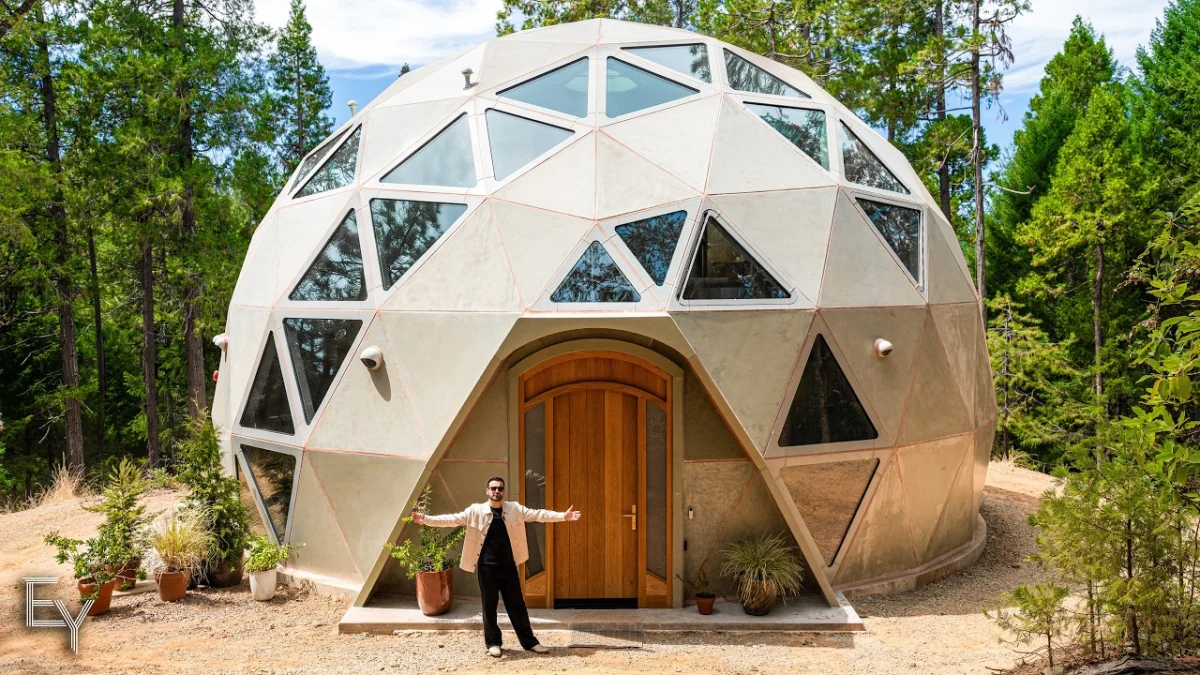 Is This the Future of Housing? — Enes Yilmazer
The Shift Toward Bioceramic Materials
Traditional high-end residential construction relies heavily on timber, steel, and reinforced concrete, all of which carry significant carbon footprints and vulnerability to environmental degradation. The debut of Geoship’s Amma One introduces an alternative structural medium: bioceramic composites. These materials are engineered to withstand extreme weather events, from hurricanes to wildfires, offering a level of physical resilience that conventional framing struggles to match.
Beyond durability, the chemical composition of bioceramics allows for a monolithic shell construction. Rather than assembling disparate components—studs, drywall, insulation, and exterior cladding—the dome structure integrates these layers into a cohesive unit. This approach minimizes thermal bridging, improves energy efficiency, and reduces long-term maintenance liabilities for property owners.
Geodesic Engineering and Interior Volume
Geodesic geometry distributes structural stress evenly across the entire building envelope, eliminating the need internal load-bearing walls. In practice, this structural efficiency creates expansive, column-free interior volumes that appeal to contemporary architectural preferences. Natural light can be captured from multiple angles through strategically placed oculus and triangular window configurations.
The spatial fluidity challenges architects to rethink interior layouts. Without the rigid rectangular constraints of conventional rooms, designers must utilize custom built-ins and curved partition walls to define functional zones. This requires a bespoke approach to interior joinery and spatial planning, aligning the unconventional exterior form with high-specification modern living.
Manufacturing and Scalability Challenges
While prototypes like Amma One demonstrate the aesthetic and functional viability of dome architecture, scaling production remains the primary hurdle for alternative housing manufacturers. Precision molding of bioceramic structural components requires specialized factory tooling and strict quality control protocols that differ vastly from standard on-site framing.
For the luxury sector, the transition from artisanal prototype to repeatable model depends on regulatory acceptance. Building codes in many premium jurisdictions are historically tailored to stick-built timber or masonry, requiring manufacturers to secure extensive engineering certifications before these structures can be widely deployed in prime residential locations.
- Bioceramic composites offer superior resistance to fire, water, and seismic activity compared to traditional timber framing.
- Geodesic dome structures eliminate interior load-bearing walls, allowing for flexible, open-plan layouts.
- Monolithic shell construction significantly reduces thermal bridging and improves long-term energy efficiency.
- Alternative construction methods require navigating complex local building codes and engineering certifications in prime markets.
- Factory-molded components demand specialized installation techniques distinct from conventional residential contracting.
The emergence of engineered bioceramic housing addresses a growing demand among affluent buyers for climate-resilient, low-maintenance assets. While unconventional architecture traditionally carries higher initial custom-build costs and potential liquidity discounts upon resale, scalable manufacturing models could eventually alter cost economics. Investors should monitor how municipal building departments adapt to non-standard structural materials, as regulatory approval remains the primary catalyst for mainstream market adoption and long-term capital appreciation in this niche sector.
Related reads
Demolition complete at former Dee Lite Bakery site in Kalihi, paving the way for future affordable housing (City and County of Honolulu (.gov), 20 Nov 2026)
The Once and Future Housing Bubble (The American Action Forum, 18 Nov 2026)
Is Cincinnati the future of sustainable, affordable housing? (University of Cincinnati, 17 Nov 2026)
County acquires 155 acres Līhu‘e for future housing development (Kauai Now, 7 Nov 2026)
From Empty Spaces to Homes (Habitat for Humanity, 16 Oct 2026)
Sources & credits
- Video: Is This the Future of Housing? — Enes Yilmazer, embedded from YouTube. The video and its thumbnail remain the property of the publisher.
- Headlines via Google News RSS; content belongs to the linked publishers.
Videos are embedded from their original YouTube channels and remain the property of their publishers; ClubProperty hosts no third-party footage or photography. Prices and details are as reported by the sources linked above at the time of writing. Nothing here is financial advice.
Artículos relacionados
Kengo Kuma’s Circular Thatched House in Rural Japan
Kengo Kuma combines traditional Japanese thatching with 3D-scanned local timber and earth in a…
Leer másA Sustainable 377-Square-Foot Danish Island Retreat
Explore a compact, highly sustainable vacation house in Denmark measuring just 377 square feet,…
Leer másThe Rise of Radical Reuse in Premium Architectural Design
Explore how avant-garde practices like THISS studio and Herzog & de Meuron are turning…
Leer másHAUS Unveils Sustainable Resort Architecture in Da Lat
Architectural studio HAUS launches a sustainable resort project in Da Lat, blending low-impact construction…
Leer más