The Sella sisters have transformed a 17th‑century Florentine palazzo into a boutique hotel that marries historic frescoes with contemporary comfort. Their choices illustrate how material quality and thoughtful layout can protect value while staying fresh.
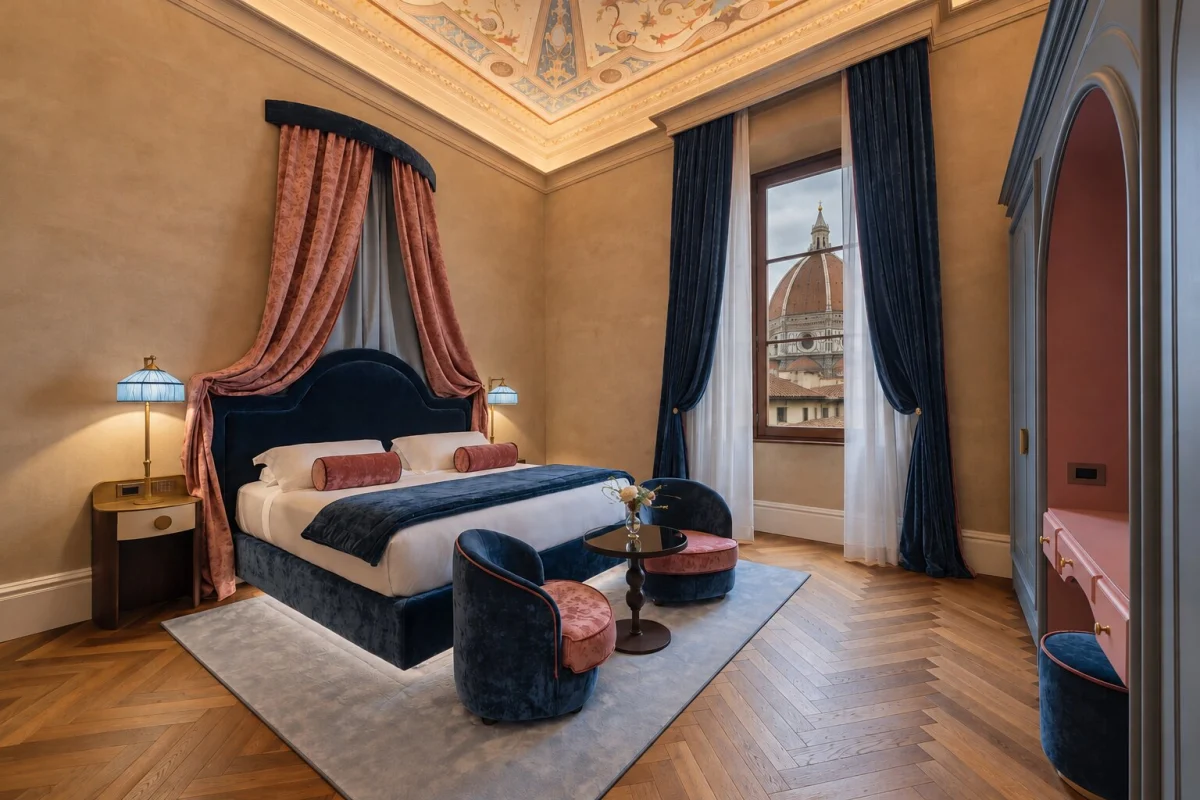
Preserving the Past: Frescoes and Surface Treatments
The first design decision was to conserve the original frescoes, using specialist conservators to stabilise pigment and repair cracks. Restoring rather than covering historic art adds provenance, a factor that consistently lifts resale potential in heritage properties.
Where wall surfaces required new finishes, the designers opted for lime plaster and natural pigments, echoing the building’s original palette while offering breathability and durability. These traditional materials age gracefully and avoid the rapid obsolescence of synthetic wallcoverings.
Bespoke Furnishings and Florentine Craftsmanship
Elena and Giulia Sella commissioned local artisans to hand‑carve walnut sideboards, inlay marble tabletops and upholster sofas in hand‑woven linen. The emphasis on regional craftsmanship creates a narrative that buyers value, especially in markets where authenticity commands premiums.
For tighter budgets, the same principle can be applied by sourcing limited‑edition pieces from reputable Italian workshops or by selecting high‑grade reproductions that retain the tactile quality of hand‑crafted wood and stone.
Palette, Light and Spatial Flow
A restrained colour scheme of warm ochres, muted greens and soft greys was layered over the historic backdrop, allowing natural light from the palazzo’s tall windows to flood interiors. Neutral tones act as a backdrop for changing décor trends, ensuring the space feels current without costly updates.
The layout respects the original room proportions, inserting discreet partitions to create private suites while preserving sightlines to the frescoed walls. Maintaining the building’s structural rhythm supports long‑term value, as alterations that compromise historic geometry often diminish market appeal.
Scalable Design for Different Budgets
For owners of smaller heritage apartments, the Palazzo Sogni approach can be distilled into three steps: (1) protect any original artwork or architectural detail; (2) invest in one or two statement pieces of locally made furniture; (3) keep the colour palette neutral and let natural light be the main accent.
Even in contemporary new builds, echoing these principles—using natural stone, timber finishes and timeless silhouettes—creates interiors that age well and retain resale strength.
- Conserve original art or architectural features; they become unique selling points.
- Choose natural materials—lime plaster, stone, solid wood—for durability and timeless appeal.
- Invest in a few high‑quality, locally crafted furniture pieces rather than mass‑produced items.
- Maintain a neutral colour palette to accommodate future style changes.
- Design layouts that respect existing proportions to avoid costly structural alterations.
The project demonstrates that heritage properties can command premium rates when restoration is paired with selective contemporary interventions. Buyers increasingly value authentic craftsmanship and preserved historic elements, which translate into higher resale margins compared with fully modernised assets. In markets such as Florence, where tourism and boutique hospitality drive demand, a hotel that showcases original frescoes and bespoke Italian furniture can achieve yields above the city average, reinforcing the case for measured, quality‑first upgrades.
Related reads
Inside Palazzo Sogni, Florence’s Dreamlike New Hotel (Design Milk, 26 Oct 2026)
Sources & credits
- Feature: Palazzo Sogni Brings a Dreamlike New Chapter to Florence — Design Milk. Linked, not reproduced.
- Main image: Design Milk, from the original feature linked above; all rights remain with the publisher and photographer.
- Headlines via Google News RSS; content belongs to the linked publishers.
Videos are embedded from their original YouTube channels and remain the property of their publishers; ClubProperty hosts no third-party footage or photography. Prices and details are as reported by the sources linked above at the time of writing. Nothing here is financial advice.
Artículos relacionados
Timeless Design Choices from Mexico City’s Book‑Lined Bar
How material, light and layout in Em‑Estudio’s basement bar create lasting value and ideas…
Leer másThe Architecture of Color: How to Use Bold Hues with Discipline
Master the application of saturated tones in premium interiors with strategic material pairing, lighting…
Leer másIlluminating the Threshold: Exterior Lighting Design and Value
Explore how intentional exterior lighting design enhances residential appeal, balances atmosphere, and protects long-term…
Leer másThe Architecture of Seasonal Interiors: Beyond the Trend Cycle
Explore how to integrate fleeting festive trends like the popular bow motif without compromising…
Leer más