A sprawling Los Angeles ranch established in 1934 has been brought to the market with a reported asking price of $22,500,000. The estate stands as an unusual example of ultra-long-term residential curation, having undergone a 26-year rebuilding process.
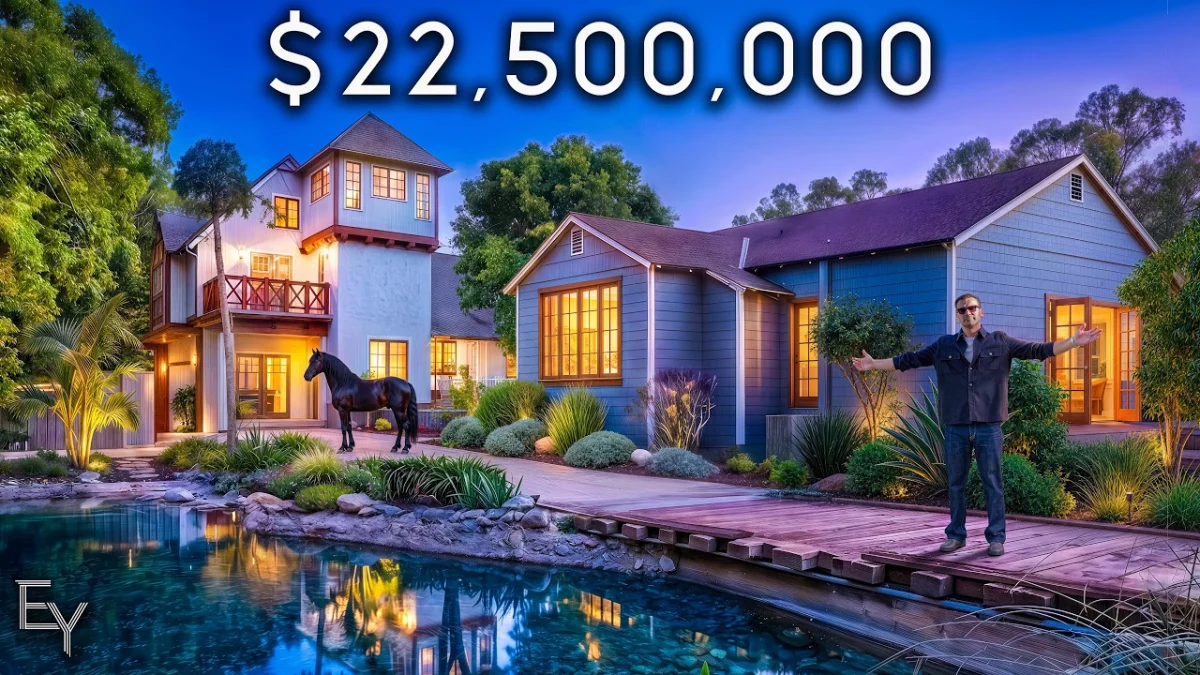 There's a $22,500,000 Ranch Hidden in the Middle of Los Angeles — Enes Yilmazer
The Evolution of a Decades-Long Project
Most luxury real estate transactions involve properties that have been modernised on a standard commercial development cycle of two to five years. This Los Angeles holding defies that pattern. Originally established in 1934, the property has spent the last 26 years under the stewardship of its current owners, Pati Hillis and Scotty Bednar, who systematically rebuilt and expanded the compound.
Rather than applying a uniform architectural template, the developers treated the acreage as a continuous, evolving canvas. This multi-decade timeline allowed for the sourcing of reclaimed materials, mature landscaping, and bespoke construction methods that cannot be replicated within a standard institutional building programme. The result is a compound that merges mid-century heritage with contemporary infrastructural standards.
The Urban Ranch Typology in Southern California
Large-scale agricultural and equestrian properties located within major metropolitan boundaries occupy a unique tier of the global property market. As urban sprawl consumed much of Southern California through the latter half of the twentieth century, historic ranches within city limits became exceptionally rare commodities.
For high-net-worth buyers, these estates offer a duality that standard suburban or coastal properties cannot match: vast acreage, complete visual privacy, and immediate proximity to metropolitan commercial centres. This scarcity of contiguous land drives capital appreciation, insulating such assets from broader market fluctuations.
Valuing Time and Craftsmanship
At a reported price tag of $22,500,000, the valuation reflects not only the square footage and land area, but the immense capital and time invested in bespoke detailing. Traditional real estate metrics often struggle to price the invisible labour of a 26-year custom build, where structures are altered, torn down, and rebuilt to achieve precise spatial and aesthetic harmony.
Properties of this nature appeal to a specific buyer segment: international investors and collectors who view real estate as a long-term artistic legacy rather than a short-term trading asset. The premium paid is for a finished ecosystem that would be virtually impossible to commission from scratch today under modern zoning regulations and rising construction costs.
- Properties with multi-decade custom restorations often command premiums based on the scarcity of their craftsmanship.
- Urban ranches provide rare acreage and privacy within major metropolitan boundaries, protecting long-term capital value.
- Evaluating historic estates requires looking beyond standard square-footage metrics to account for mature landscaping and bespoke infrastructure.
- Strict modern zoning laws make reproducing historic rural-style compounds within cities increasingly difficult.
- Long-term residential projects appeal to buyers seeking established heritage alongside modern amenities.
The Los Angeles ultra-prime sector demonstrates strong resilience for properties offering distinct architectural provenance and substantive land parcels. While standard luxury inventory faces pricing pressures from shifting interest rates, rare legacy estates with historical roots operate within an insulated market tier. Investors view multi-decade custom developments as definitive stores of value, largely because the replacement cost—accounting for land acquisition, time, and bespoke construction—frequently exceeds current asking prices. Comparable transactions in prime enclave markets suggest that unique historic compounds retain liquidity better than generic modern builds during economic corrections.
Sources & credits
- Video: There's a $22,500,000 Ranch Hidden in the Middle of Los Angeles — Enes Yilmazer, embedded from YouTube. The video and its thumbnail remain the property of the publisher.
Videos are embedded from their original YouTube channels and remain the property of their publishers; ClubProperty hosts no third-party footage or photography. Prices and details are as reported by the sources linked above at the time of writing. Nothing here is financial advice.
Povezani članci
Evaluating the US Housing Market Through Regional Rankings
An analysis of the Architectural Digest 2026-2027 index for the US, examining how lifestyle…
Pročitajte višeHudson Valley’s Edition Farm Lists for $6.9 Million
Spanning 114 acres in Hyde Park, the historic Edition Farm South features a renovated…
Pročitajte višeThe Zero-Color Living Room: Textural Minimalism in LA
Explore how zero-color design and warm plaster tones define a minimalist Los Angeles estate,…
Pročitajte višeChristian Yelich Lists Malibu Retreat for $30 Million
MLB star Christian Yelich has placed his Malibu coastal retreat on the market, asking…
Pročitajte više