





Skidmore, Owings & Merrill has completed the initial phase of a major overhaul at Philadelphia's historic William H Gray III 30th Street Station. The project breathes new life into the 1930s beaux-arts transit hub, balancing heritage conservation with modern infrastructural demands.
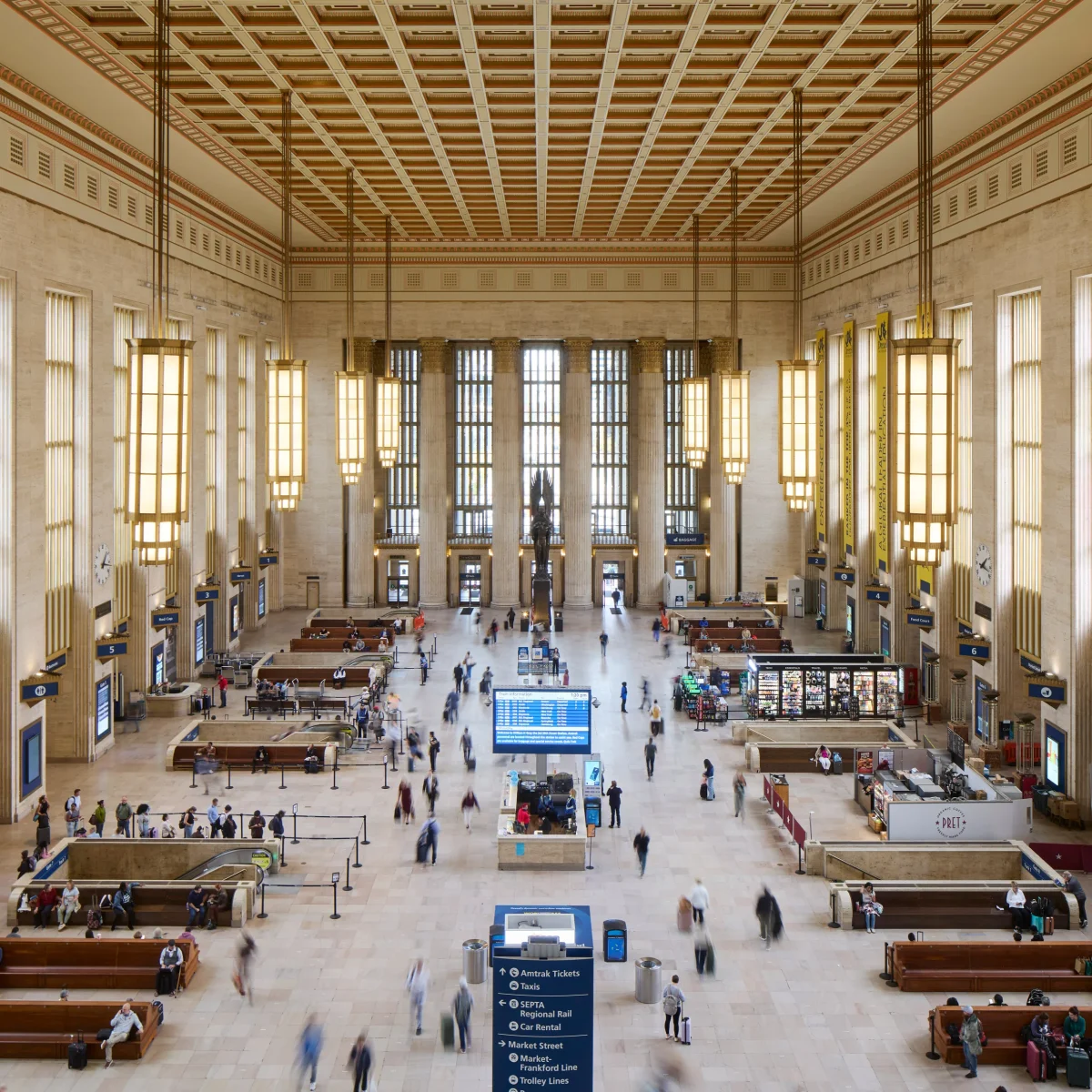
Architectural Heritage and Context
Originally opened in 1933, the William H Gray III 30th Street Station stands as a prominent example of monumental civic architecture in the United States. Designed in the neoclassical and beaux-arts traditions, the building features a grand scale and dignified limestone facade that anchors Philadelphia’s western downtown district.
Skidmore, Owings & Merrill approached the restoration by respecting the original structural integrity while addressing decades of wear and tear. The practice focused on preserving key historical interior volumes, allowing the original architectural language to remain legible to daily commuters and visitors alike.
Materiality and Spatial Engineering
The intervention prioritises the careful cleaning and repair of historic surfaces, including restored stonework, metallic detailing, and decorative plaster. Modern insertions are clearly demarcated from the 1930s fabric, adhering to contemporary heritage conservation standards.
Improved circulation routes and upgraded passenger facilities were integrated into the existing floor plates. By opening up sightlines and decluttering the main concourse, the design team restored the spatial clarity intended by the original architects.
Infrastructure and Performance
Beyond aesthetic restoration, the first phase addresses critical behind-the-scenes systems. Energy-efficient lighting, updated mechanical ventilation, and enhanced accessibility compliance bring the century-old structure up to modern operational standards.
These technical upgrades reduce the building’s environmental footprint while lowering long-term maintenance costs for Amtrak, ensuring the facility can handle growing passenger volumes efficiently over the coming decades.
- Respect historical proportions while upgrading building services for modern use.
- Use clear material differentiation between historic fabric and new interventions.
- Prioritise natural light and open sightlines to improve large-scale spatial circulation.
- Invest in high-performance mechanical systems to reduce long-term operational overheads.
Large-scale infrastructure restorations like the 30th Street Station project consistently catalyse surrounding real estate value. For international investors, urban nodes with upgraded transit connectivity represent resilient asset classes. High-quality public architecture anchors neighborhoods, driving commercial demand and residential desirability in adjacent districts. While specific project budgets for this phase are reported across industry channels rather than fully disclosed in a single financial filing, such public-private transit investments reliably stimulate local property markets.
Related reads
SOM completes first phase of Philadelphia train station restoration (Dezeen, 17 Nov 2026)
SOM and Amtrak Complete First Phase of William H. Gray III 30th Street Station Redevelopment (Skidmore, Owings & Merrill, 13 Nov 2026)
Amtrak Celebrates Major Milestones in Transformation of Philadelphia’s Gray 30th Street Station (Amtrak Media, 13 Nov 2026)
First phase of renovation completed at Philadelphia’s 30th Street Station (updated) (Trains Magazine, 14 Nov 2026)
SOM, Amtrak, and others complete phase one of restoration project at Philadelphia’s 30th Street Station (The Architect’s Newspaper, 17 Nov 2026)
Sources & credits
- Feature: SOM completes first phase of Philadelphia train station restoration — Dezeen. Linked, not reproduced.
- Main image: Dezeen, from the original feature linked above; all rights remain with the publisher and photographer.
- Headlines via Google News RSS; content belongs to the linked publishers.
Videos are embedded from their original YouTube channels and remain the property of their publishers; ClubProperty hosts no third-party footage or photography. Prices and details are as reported by the sources linked above at the time of writing. Nothing here is financial advice.
Featured image: Photo: Wannes Spoelders / Pexels
관련 기사
Restoring the Executive Mansion: White House Exterior and Heliport
An examination of the recent exterior restoration and infrastructure additions at the White House…
더 읽기Scaling Down: A Philadelphia Townhouse Renovation
How a Philadelphia townhouse renovation traded sprawling layouts for intimate, moody interiors, demonstrating the…
더 읽기Restoring the House of People by DinellJohansson
Stockholm's iconic Folkets Hus undergoes a meticulous architectural restoration by DinellJohansson, honouring its modernist…
더 읽기Philadelphia Chocolate Factory Reborn as Community Hub
ISA transforms a former Blumenthal Brothers chocolate factory in Philadelphia into a 66,600-square-foot community…
더 읽기