Selecting the correct floor covering requires an understanding of tactile resilience and architectural scale within premier living spaces. Recent design reviews highlight wool as the definitive material for balancing acoustic dampening with long-term structural integrity.
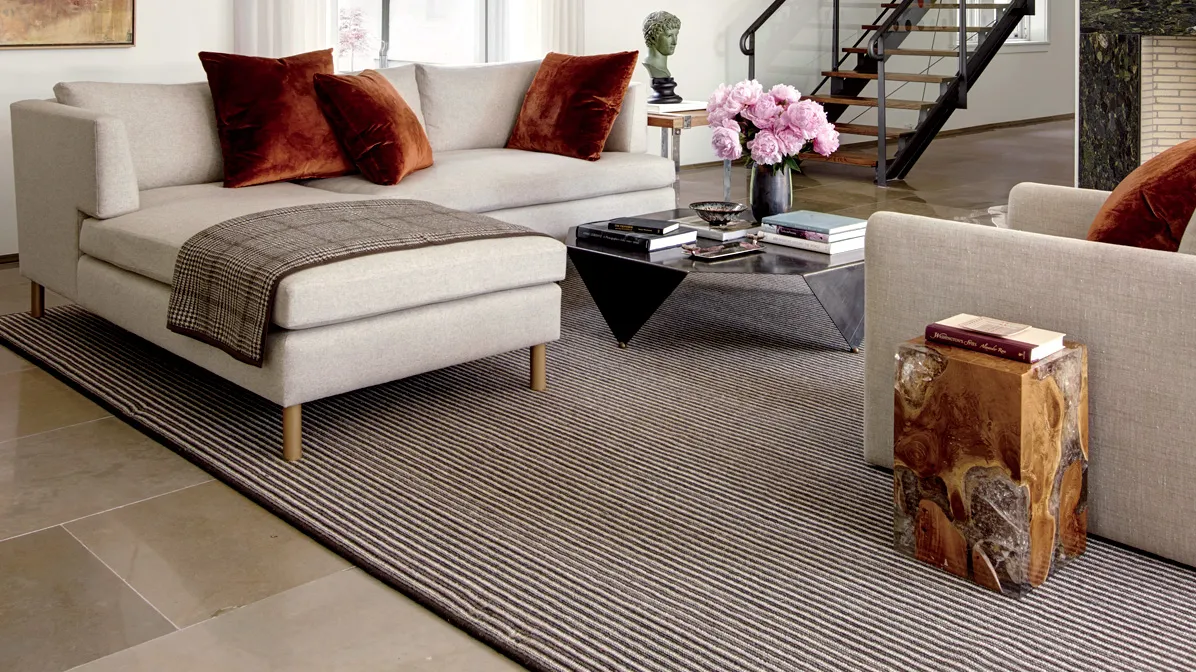
The hierarchy of construction: Knotted, tufted, and flatwoven
The longevity of a floor covering is dictated fundamentally by its construction method. Hand-knotted wool rugs represent the pinnacle of traditional craftsmanship, involving thousands of individual knots tied meticulously around the warp and weft. This labour-intensive process yields a dense pile that withstands decades of footfall in high-traffic zones such as entrance halls and formal reception rooms.
Conversely, hand-tufted alternatives offer a more accessible route to plush textures, utilizing a tufting gun to punch yarn through a primary backing before securing it with latex. While visually impressive and soft underfoot, tufted pieces require careful placement away from damp environments and heavy furniture legs that might compromise the backing over time. Flatweaves, lacking a traditional pile entirely, provide a streamlined profile ideal for dining areas where chair movement must remain unobstructed.
Navigating texture: From low-pile precision to Moroccan shag
Textural variety dictates how light and shadow interact across an interior floor plan. Low-pile flatweaves function effectively in transitional spaces, offering geometric clarity and straightforward maintenance without trapping fine particulate matter. Their tight weave resists crushing, making them suitable for home offices and library settings where heavy desks exert localized pressure.
At the opposite end of the spectrum, high-pile and Moroccan shag variations introduce organic warmth and sound absorption to minimalist environments. Crafted from unspun or loosely spun fleece, these heavier designs soften austere architectural lines, such as polished concrete or wide-plank oak flooring, creating distinct thermal and tactile zones within open-plan residences.
Acoustic and thermal performance in expansive properties
Modern open-plan architecture, characterized by vaulted ceilings and expansive glass panels, frequently suffers from reverberation and echo. Wool possesses natural acoustic dampening properties, absorbing mid- to high-frequency sound waves that otherwise bounce off hard interior surfaces. Incorporating substantial wool rugs into double-height living spaces fundamentally alters the auditory quality of the room.
Beyond acoustics, natural wool fibres provide superior thermal insulation compared to synthetic alternatives. Retaining microscopic pockets of air within the fibre structure, these rugs regulate ambient floor temperature efficiently, proving particularly advantageous in alpine chalets or coastal properties where subfloor drafts can otherwise compromise interior comfort.
- Prioritise hand-knotted wool constructions for high-traffic public areas to ensure multi-decade durability.
- Select flatweave or low-pile options for dining rooms to allow seamless movement of heavy chairs.
- Utilise thick Moroccan shag or high-pile rugs to introduce warmth and break up minimalist, hard-surface architecture.
- Leverage wool's natural acoustic properties to mitigate echo and reverberation in double-height, open-plan spaces.
- Ensure natural fibres are kept clear of chronic moisture to preserve structural backing integrity.
In the upper tier of the international residential market, staging and interior detailing significantly influence buyer perception and transactional velocity. While movable furnishings like rugs rarely form part of the permanent chattel valuation unless custom-fitted, the intentional layering of high-grade natural textiles demonstrates meticulous property maintenance. High-net-worth buyers assess properties holistically; the presence of bespoke, acoustically mitigating floor coverings signals that a residence has been engineered for sensory comfort rather than superficial cosmetic appeal. Specifying durable, premium materials protects the underlying flooring investment, reducing wear on costly hardwood or stone surfaces during periods of occupancy or marketing.
Related reads
The Best Wool Rugs We’d Roll Out in Any Room (Architectural Digest, 26 Sep 2026)
Rugs for Every Room Are Up to 84% Off Ahead of Labor Day (Starting at $35) (Apartment Therapy, 31 Aug 2026)
These Are the Absolute Best Area Rugs We’ve Found, After Testing 100+ (The Spruce, 16 Sep 2026)
25 best places to buy classic, colorful and easy-to-clean rugs online (New York Post, 11 Aug 2026)
Sources & credits
- Feature: 8 Best Wool Rugs, From Low-Pile Flatweaves to Moroccan Shag — Architectural Digest. Linked, not reproduced.
- Main image: Architectural Digest, from the original feature linked above; all rights remain with the publisher and photographer.
- Headlines via Google News RSS; content belongs to the linked publishers.
Videos are embedded from their original YouTube channels and remain the property of their publishers; ClubProperty hosts no third-party footage or photography. Prices and details are as reported by the sources linked above at the time of writing. Nothing here is financial advice.
Gerelateerde artikelen
Maximising Compact Space Through Bold Design in Moscow
Exploring how a 400-square-foot Moscow apartment uses vibrant colours and clever layout planning to…
Lees meerRhinebeck Waterfall Residence Lists for $8.5 Million
A striking Hudson Valley home designed by the late Steve Mensch, positioned over a…
Lees meerThirty Years of the Andrew Martin Interior Design Review
As the Andrew Martin Interior Design Award marks three decades, we examine how global…
Lees meerThe Catskills Cabin Shift: Upstate New York Real Estate
Explore how design-forward short-term rentals in the Catskills are reshaping local property values and…
Lees meer