


Housing loans in Portugal reached an all-time high of €120.2 billion in September 2026, driven by sustained buyer activity across the residential sector. Average interest rates on these loans stood at 3.19%, according to data reported by The Portugal News.
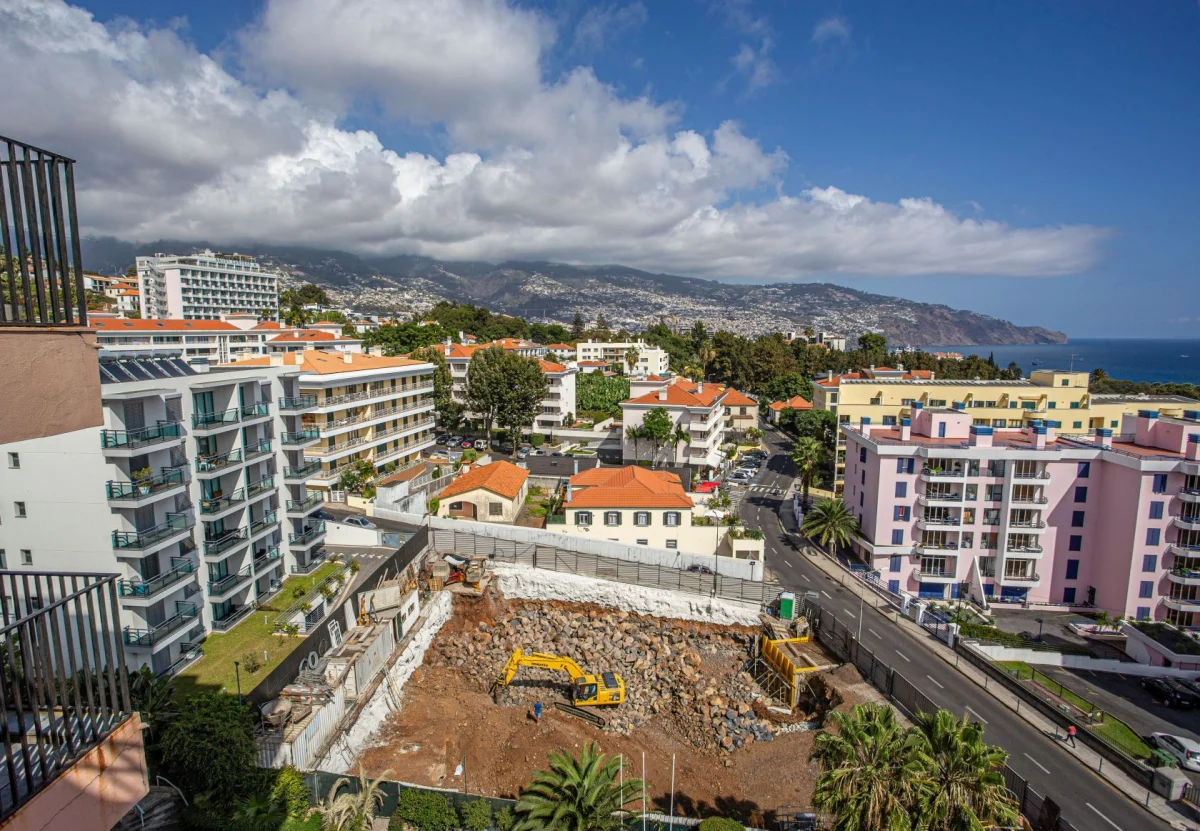
The Scale of Borrowing in September 2026
The total stock of residential mortgage debt in Portugal climbed to €120.2 billion in September 2026, reflecting continuous appetite from domestic and international buyers alike. Despite broader macroeconomic shifts across the eurozone, buyer demand for prime and secondary residential assets has remained remarkably resilient.
Concurrently, average lending rates settled at 3.19% during the same period. For prospective buyers, this rate represents a distinct borrowing environment compared to the near-zero rates of previous years, requiring more rigorous financial modelling when structuring property acquisitions.
Institutional Funding and Housing Supply Measures
Beyond commercial retail lending, the broader financing ecosystem in Portugal has seen significant institutional intervention to address supply constraints. In September 2026, it was reported by Bloomberg that Portugal secured a €1.5 billion loan from the European Investment Bank (EIB) aimed at easing the national housing crunch.
This influx of supranational capital is designed to stimulate residential development and improve housing availability. For investors, public and institutional funding initiatives of this scale often signal future shifts in infrastructure, regional development, and municipal supply pipelines that can influence long-term asset values.
Implications for Acquisition Costs and Yields
A 3.19% average interest rate directly alters the cost-of-capital calculation for leveraged property buyers in Portugal. When factoring in the total acquisition cost—which includes municipal property transfer tax (IMT), stamp duty, and notary fees—leveraged purchasers must carefully evaluate their debt-service-coverage ratios.
For example, a €500,000 residential acquisition with a 60% loan-to-value mortgage (€300,000) at a 3.19% interest rate results in substantially different monthly debt servicing than was standard during the low-rate era. Investors targeting rental yields must balance these elevated financing costs against prevailing gross rental returns in prime locations such as Lisbon, Porto, and the Algarve.
- Verify current commercial bank lending criteria and maximum loan-to-value (LTV) limits for non-resident buyers in Portugal.
- Factor the 3.19% baseline interest rate into debt-service calculations, ensuring stress-testing for potential rate fluctuations.
- Consult a qualified Portuguese tax advisor regarding IMT (transfer tax) and stamp duty obligations prior to making an offer.
- Review the impact of holding structures, such as corporate versus personal ownership, on rental income tax liabilities.
- Examine how municipal supply initiatives, backed by recent EIB funding, may influence future local property valuations.
The climb in mortgage volume to €120.2 billion demonstrates deep structural liquidity in the Portuguese residential market, even as borrowing costs average 3.19%. For international investors, this indicates that market depth is supported by active domestic and foreign capital rather than speculative credit expansion alone. However, higher financing costs place a premium on asset selection. Properties with strong organic rental demand and robust capital preservation characteristics will outperform, as the margin for error on leveraged yields narrows compared to previous low-rate cycles. Investors should monitor how EIB-backed housing initiatives influence regional supply over the medium term.
Related reads
Portugal mortgage lending hits record €120.2 billion as demand rises (The Portugal News, 3 Nov 2026)
Portugal Gets €1.5 Billion EIB Loan to Ease Its Housing Crunch (Bloomberg.com, 7 Sep 2026)
Lufthansa wins contest for TAP Air Portugal stake (Yahoo Finance, 14 Oct 2026)
euro-zone debt crisis (Britannica, 29 Sep 2026)
Sources & credits
- Feature: Portugal mortgage lending hits record €120.2 billion as demand rises — The Portugal News. Linked, not reproduced.
- Main image: The Portugal News, from the original feature linked above; all rights remain with the publisher and photographer.
- Headlines via Google News RSS; content belongs to the linked publishers.
Videos are embedded from their original YouTube channels and remain the property of their publishers; ClubProperty hosts no third-party footage or photography. Prices and details are as reported by the sources linked above at the time of writing. Nothing here is financial advice. This article is general information, not financial or tax advice; speak to a qualified adviser about your own situation.
Gerelateerde artikelen
The Economics of Maximalist Interiors and Resale Appeal
How to balance bold, high-end interior styling with long-term property liquidity, drawing lessons from…
Lees meerManhattan Penthouse Acquisition Sets Pace for Luxury Market
Fashion Nova founder Richard Saghian has acquired a full-floor Manhattan penthouse at 111 Murray…
Lees meerSpanish Coastal Surge: Torremolinos Prices Rise Sharply
Torremolinos records a reported 161 percent property price increase, highlighting intense demand across Spain's…
Lees meerPortugal threatens residence permit revocation for immigrants involved in illegal housing protests
The Portuguese government warns that participation in unlawful housing demonstrations may lead to cancellation…
Lees meer