The intersection of a maritime climate and modernist design demands strict material discipline. A recently completed three-level residence in Victoria, British Columbia, demonstrates how restrained interior architecture can anchor expansive coastal views without competing with the landscape.
Material Integrity and the Coastal Palette
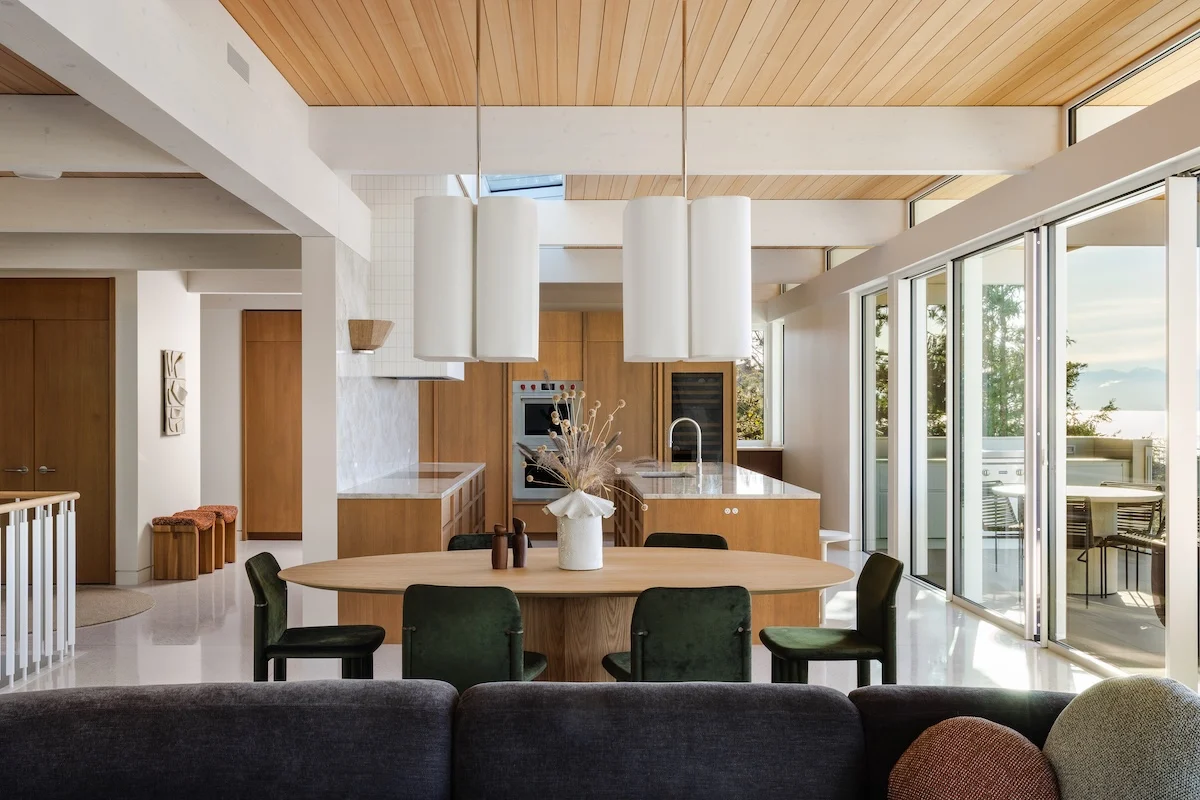
Designing for a waterfront environment requires materials that weather gracefully under heavy UV exposure and moisture. In the Victoria residence designed by studio Bidgood, the interior palette relies on desaturated wood tones, matte stone, and tactile plaster that echo the surrounding Salish Sea landscape rather than imposing foreign finishes upon it.
When evaluating resale value, permanent architectural surfaces consistently outperform decorative wall treatments. Investing in solid timber joinery, honed natural stone counters, and durable metal hardware provides a tactile longevity that fabricated veneers simply cannot replicate. These foundational elements establish a baseline of quality that appeals directly to discerning property buyers.
Light, Layout, and Spatial Flow Across Levels
Spanning three distinct levels, the home uses vertical circulation not merely as a functional necessity, but as a mechanism for shifting spatial mood. Lower levels offer protected, introspective gathering spaces, while the upper floors open completely to panoramic water views through expansive floor-to-ceiling glazing.
Controlling natural light in a glass-heavy modernist envelope requires careful planning. Interior layouts must account for sun paths throughout the year, integrating recessed shading pockets and strategic partition walls that create intimate zones within open-plan footprints. This balance prevents a home from feeling overly exposed or cavernous.
Craftsmanship Versus Ephemeral Trends
Interior schemes that rely heavily on color trends or specific decorative eras often face rapid depreciation when tastes shift. Conversely, bespoke millwork and custom cabinetry—such as the integrated storage solutions executed across this West Coast project—provide structural utility that transcends aesthetic cycles.
Buyers evaluating premium properties look for evidence of meticulous detailing: flush-mounting, seamless transitions between dissimilar flooring materials, and hardware that functions with mechanical precision. These markers of high-level craftsmanship indicate that the unseen construction quality matches the visible surface design.
Applying the Principles at Different Budgets
Achieving a timeless modernist aesthetic does not require an unlimited budget, but it does demand prioritized spending. At a modest scale, allocate funds toward architectural lighting fixtures and solid brass or bronze hardware—touchpoints that are physically interacted with daily and elevate the perception of standard joinery.
For higher-end renovations, focus capital on bespoke architectural millwork and continuous flooring surfaces that run uninterrupted between rooms. Eliminating unnecessary thresholds and visual clutter creates the illusion of expansive volume, which remains one of the most reliable value drivers in contemporary real estate.
- Prioritize solid, tactile materials like honed stone and natural timber over synthetic veneers for lasting durability.
- Use bespoke millwork to solve storage needs while adding permanent architectural value to open-plan layouts.
- Invest budget where the hand interacts with the home, such as solid metal hardware and switches.
- Design multi-level floor plans to offer both expansive, light-filled entertaining spaces and protected, intimate retreats.
- Maintain a restrained, nature-inspired palette to ensure the interior complements rather than competes with exterior views.
Properties that successfully synthesize regional architectural vernaculars—such as the West Coast modernism seen in this Victoria residence—occupy a resilient niche in the luxury market. Premium buyers increasingly value architectural authenticity paired with low-maintenance, high-durability coastal materials. Interiors that avoid fleeting decorative trends secure higher liquidity upon resale because they require minimal cosmetic intervention from a new owner. In prime maritime locations, structural material integrity directly underpins long-term capital preservation.
Related reads
California Modernism Finds a Home on Canada's West Coast (Design Milk, 29 Oct 2026)
Sources & credits
- Feature: A Modernist Home in British Columbia Embraces Its Coastal Setting — Design Milk. Linked, not reproduced.
- Main image: Design Milk, from the original feature linked above; all rights remain with the publisher and photographer.
- Headlines via Google News RSS; content belongs to the linked publishers.
Videos are embedded from their original YouTube channels and remain the property of their publishers; ClubProperty hosts no third-party footage or photography. Prices and details are as reported by the sources linked above at the time of writing. Nothing here is financial advice.
Relaterte artikler
Evaluating the US Housing Market Through Regional Rankings
An analysis of the Architectural Digest 2026-2027 index for the US, examining how lifestyle…
Les merTimeless Design Choices from Mexico City’s Book‑Lined Bar
How material, light and layout in Em‑Estudio’s basement bar create lasting value and ideas…
Les merThe Architecture of Color: How to Use Bold Hues with Discipline
Master the application of saturated tones in premium interiors with strategic material pairing, lighting…
Les merIlluminating the Threshold: Exterior Lighting Design and Value
Explore how intentional exterior lighting design enhances residential appeal, balances atmosphere, and protects long-term…
Les mer