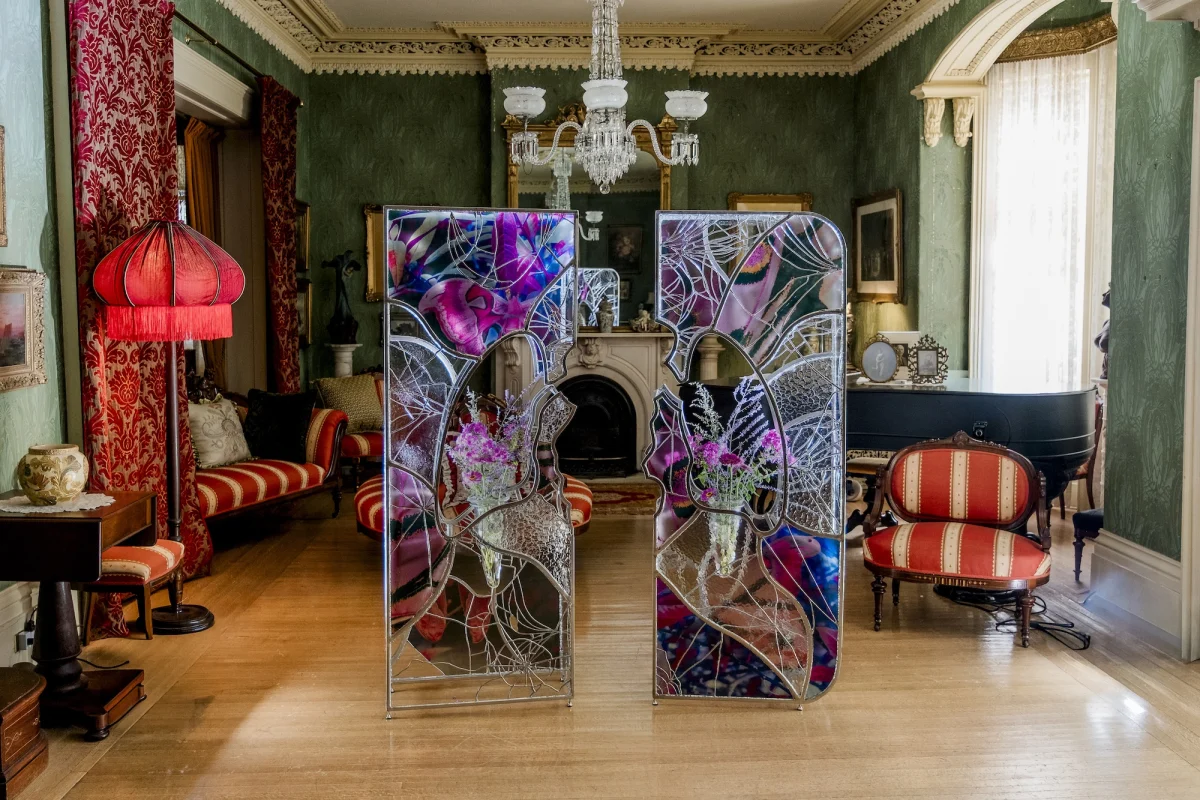
At Toronto's historic Spadina Museum, a site-specific exhibition titled 'In Broken Light' reinterprets domestic spaces through fractured mirrors, stained glass, and sound. The project offers residential designers tangible lessons in manipulating natural light and material texture.
The Geometry of Reflection
Interior architecture often relies on uniform surfaces to maximize perceived volume, yet artist Ry Van Der Hout demonstrates the compelling alternative of deliberate fragmentation. By introducing shattered mirrors into historical rooms, the installation disrupts conventional lines of sight and forces a re-examination of spatial boundaries. In high-end residential design, controlled use of distressed or faceted mirror panels can introduce depth without resorting to the dated expanses of full-wall glazing popular in late-twentieth-century developments.
This approach respects the architectural envelope while altering how occupants experience circulation. Instead of merely reflecting light uniformly, fractured surfaces scatter illumination across different planes, creating dynamic shadows that shift throughout the day. It is a technique that bridges fine art and structural detailing, proving particularly effective in transitional zones such as entrance halls and stairwells.
Luminous Palettes and Stained Glass
The integration of stained glass within the Toronto exhibition highlights the capacity of tinted mediums to redefine a room’s chromatic identity. Rather than depending entirely on applied wall finishes or textile selections, harnessing natural light through colored glass introduces an ever-changing palette that responds directly to external weather conditions.
For property owners seeking enduring value, investing in bespoke architectural glass offers a superior return compared to fast-moving interior trends. While heavy window treatments or trendy paint colors quickly date, structural glass installations remain permanent fixtures of craftsmanship. At a modest scale, homeowners can apply this principle through targeted sidelights or transoms, filtering light into utilitarian spaces to elevate their atmospheric quality.
Lasting Resale Value Versus Transient Trends
Discerning buyers increasingly evaluate properties on the quality of their permanent materials rather than surface-level staging. Installations that engage with light and shadow—much like the interventions at Spadina Museum—contribute to the foundational architecture of a home, distinguishing a bespoke property from mass-market developments.
When capital is allocated toward authentic craftsmanship, such as custom stonework, specialized glazing, or bespoke metal framing, the asset retains its appeal across market cycles. Conversely, relying purely on digital art displays or modular decorative items offers little long-term equity. Integrating thoughtful light manipulation into the core fabric of a home remains one of the most reliable ways to secure enduring aesthetic and financial value.
- Use faceted or distressed mirrors instead of flat sheets to add depth to narrow corridors.
- Invest in permanent architectural glass to introduce dynamic, natural color palettes.
- Prioritize custom craftsmanship over transient decorative trends to protect long-term asset value.
- Consider how natural light interacts with transitional zones like stairwells and entryways.
- Apply scaled stained glass elements in transoms or sidelights for subtle atmospheric impact.
In the upper tiers of the international property market, buyers pay a distinct premium for architectural integrity and bespoke detailing. Interventions that manipulate light and spatial perception—echoing the principles found in museum-grade site-specific art—elevate a residence beyond standard square-footage valuation. Properties featuring permanent, high-craftsmanship elements such as custom glazing and textured wall treatments consistently outperform standardized developments during market corrections. For investors, allocating capital to structural finishes rather than temporary cosmetic upgrades secures both immediate lifestyle quality and robust long-term liquidity.
Related reads
Shattered Glass Reframes the Past at Spadina Museum (Design Milk, 11 Oct 2026)
Sources & credits
- Feature: Ry Van Der Hout Reassembles Memory in ‘In Broken Light’ — Design Milk. Linked, not reproduced.
- Main image: Design Milk, from the original feature linked above; all rights remain with the publisher and photographer.
- Headlines via Google News RSS; content belongs to the linked publishers.
Videos are embedded from their original YouTube channels and remain the property of their publishers; ClubProperty hosts no third-party footage or photography. Prices and details are as reported by the sources linked above at the time of writing. Nothing here is financial advice.
Artigos Relacionados
Timeless Design Choices from Mexico City’s Book‑Lined Bar
How material, light and layout in Em‑Estudio’s basement bar create lasting value and ideas…
Ler maisThe Architecture of Color: How to Use Bold Hues with Discipline
Master the application of saturated tones in premium interiors with strategic material pairing, lighting…
Ler maisIlluminating the Threshold: Exterior Lighting Design and Value
Explore how intentional exterior lighting design enhances residential appeal, balances atmosphere, and protects long-term…
Ler maisThe Architecture of Seasonal Interiors: Beyond the Trend Cycle
Explore how to integrate fleeting festive trends like the popular bow motif without compromising…
Ler mais