Prime central London residential values recorded a 5% decline in the third quarter of 2026, according to data published by Property Wire. Sellers in high-value districts are increasingly meeting the market as eight out of ten properties exchange below their initial asking price.
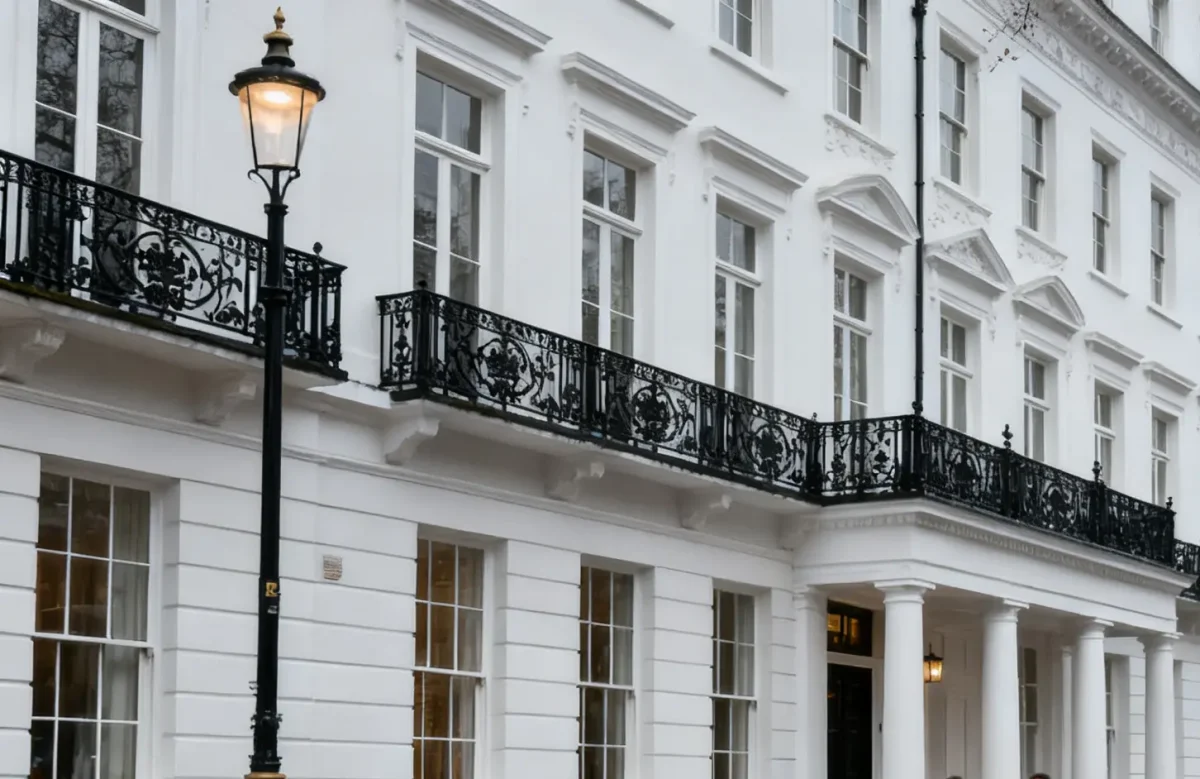
Discounting Becomes the Norm in Top Postcodes
The third quarter of 2026 has brought sharper price corrections to the capital’s most exclusive residential enclaves. Data published by Property Wire indicates that prime London property values retreated by 5% over the three-month period. This downward adjustment reflects a broader recalibration across districts that historically insulated themselves from broader macroeconomic volatility through high international demand.
Complementing these figures, research published by Coutts in October 2026 reveals that eight out of ten properties in prime central London now sell below their initial asking price. In ultra-prime addresses across Mayfair, Belgravia and Knightsbridge, properties are achieving an average discount of 10% compared to original list prices. Sellers who position their assets unrealistically are experiencing extended periods on the market before securing transactions.
Buyer Leverage and Liquidity Shifts
The rise in successful below-asking transactions signals a distinct shift in market equilibrium toward well-capitalised buyers. With borrowing costs remaining elevated compared to the historic lows of the previous decade, discretionary purchasers in the prime bracket are exercising caution and exploiting the current environment to negotiate terms.
Market analysts point out that liquidity in prime central London has become increasingly price-sensitive. While underlying global wealth still targets the capital for long-term capital preservation, current buyers demand immediate value rather than banking solely on future capital appreciation. Consequently, vendors with genuine motivations to sell are adjusting price expectations to meet incoming capital.
Context Within the Wider UK Cycle
The 5% quarterly drop contributes to a longer trajectory of adjustment for prime London real estate, which has seen cumulative softening from previous cyclical peaks. Commentators tracking the sector note that London has experienced a decoupling from regional UK housing trends, driven by higher transaction costs, stamp duty rates and international capital flows responding to global tax and regulatory shifts.
For international buyers monitoring the United Kingdom, currency fluctuations continue to play a pivotal role in purchasing power. While nominal prices contract, foreign investors holding foreign currency may find that currency exchange dynamics offset some local price corrections, though caution remains the primary operating strategy across all buyer cohorts.
- Prime central London prices fell by 5% in the third quarter of 2026 according to Property Wire data.
- Eighty percent of properties in prime postcodes now sell below their original asking price.
- Mayfair, Belgravia and Knightsbridge record average discounts of 10% against list prices.
- Buyers hold significant negotiation leverage due to elevated borrowing costs and cautious sentiment.
- Sellers must price assets realistically to secure transactions within reasonable marketing periods.
The Q3 2026 data indicates that prime central London is firmly a buyer's market, offering acquisition opportunities at a discount to recent historical peaks. For investors with liquid capital, the widespread acceptance of sub-asking prices across Mayfair, Belgravia and Knightsbridge provides room for margin upon entry. However, short-term capital growth remains subdued. Buyers should verify comparable recent transactions with local advisors rather than relying on legacy asking prices, factoring in holding costs and UK regulatory frameworks before committing capital.
Related reads
Eight in 10 homes in London’s poshest postcodes now sell below asking price, Coutts finds (The Guardian, 31 Oct 2026)
Are UK house prices heading for a crash? (The Week, 17 Sep 2026)
How London became the property market’s black sheep (Financial Times, 27 Sep 2026)
Prime London property prices fall up to 25% from peak (PropertyWire, 3 Oct 2026)
Prime property prices fall further as buyers gain the upper hand (Property Industry Eye, 12 Oct 2026)
Sources & credits
- Feature: Prime London property prices fall 5% in third quarter — Property Wire. Linked, not reproduced.
- Main image: Property Wire, from the original feature linked above; all rights remain with the publisher and photographer.
- Headlines via Google News RSS; content belongs to the linked publishers.
Videos are embedded from their original YouTube channels and remain the property of their publishers; ClubProperty hosts no third-party footage or photography. Prices and details are as reported by the sources linked above at the time of writing. Nothing here is financial advice.
Связанные статьи
Evaluating the US Housing Market Through Regional Rankings
An analysis of the Architectural Digest 2026-2027 index for the US, examining how lifestyle…
Читать далееHistoric Los Angeles Ranch Lists for $22.5 Million
Explore a 1934 Los Angeles ranch listed at $22,500,000 after a meticulous 26-year restoration…
Читать далееCrafting the Contemporary London Garden Studio
O'Sullivan Skoufoglou Architects designs a pared-back Highbury garden studio, balancing brick, timber, and functional…
Читать далееUK Housing Tax Reform: Abolishing Stamp Duty and Council Tax
Oxford academic John Muellbauer calls for sweeping UK property tax reform, proposing the abolition…
Читать далее