





Contemporary architectural discourse increasingly collapses the boundary between internal circulation and external envelope design. As recently highlighted in architectural reviews, moving staircases to the exterior of buildings transforms functional necessities into striking primary facades.
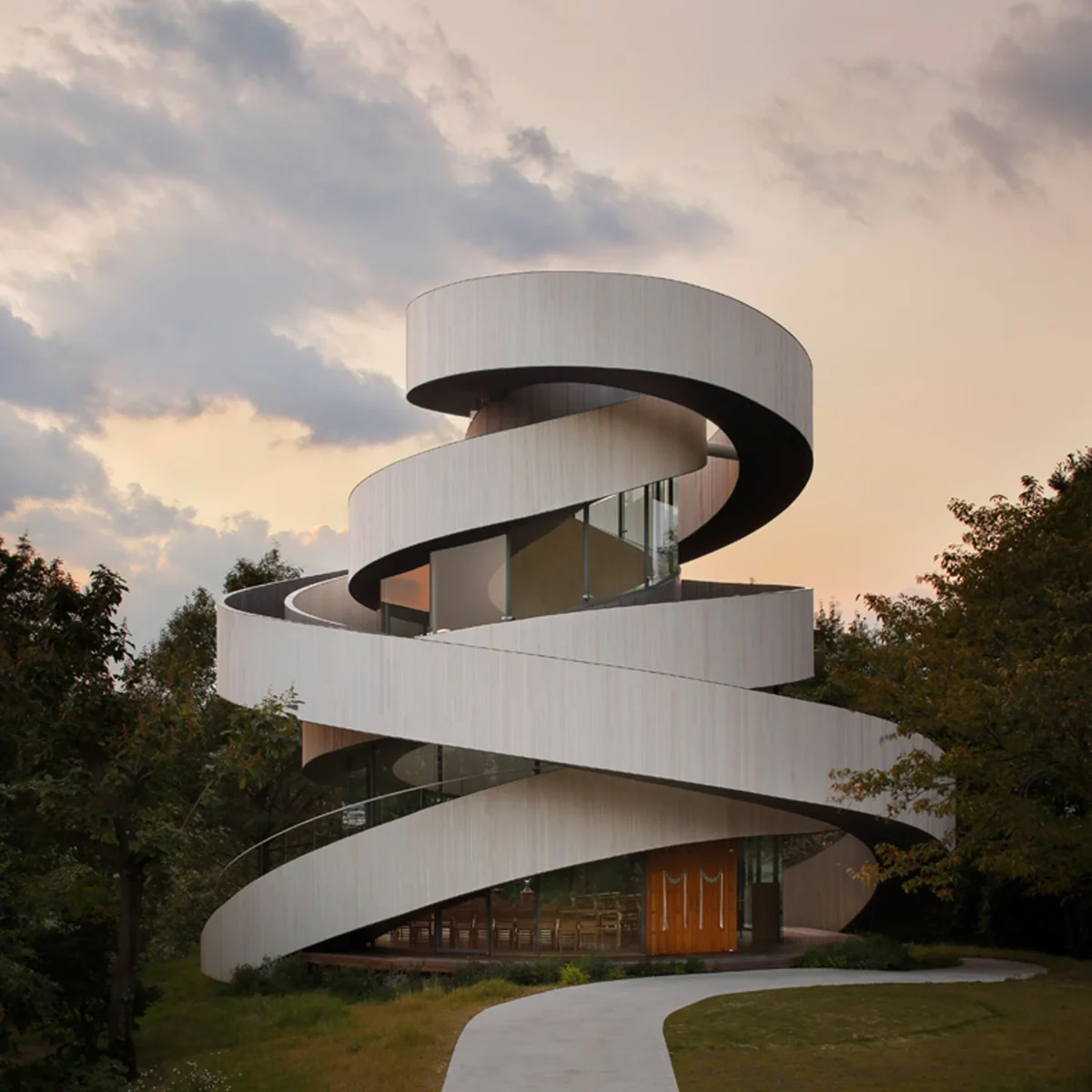
Original featureFive buildings where the staircase is the facadeDezeen · 21 November 2026 →
The Evolution of External Circulation
Across international projects ranging from a Japanese wedding chapel to academic institutions in India and restructured monuments in Albania, architects are externalising structural stairs. Rather than hiding vertical movement within a core, designers wrap circulation around the exterior perimeter. This approach turns passive movement into an active, theatrical component of the building’s daily operation.
By shifting the staircase outside the primary thermal envelope, buildings gain internal floor space flexibility while presenting a constantly shifting geometric relief to the streetscape. The facade becomes animated by the movement of occupants, creating a living elevation that responds directly to human activity.
Materiality and Structural Engineering
Executing an exterior staircase that doubles as a facade requires rigorous engineering, particularly regarding weatherproofing, thermal bridging, and load distribution. Architects frequently employ cast-in-place architectural concrete, weathering steel, or reinforced timber to withstand environmental exposure while maintaining clean sightlines.
The structural interplay relies on cantilevers and tension rods, reducing the need for bulky ground-level supports. This creates a lighter visual footprint, allowing natural light to penetrate deep into the interior spaces behind the open-air treads and risers.
Urban Integration and Spatial Efficiency
For dense urban sites, integrating the staircase into the facade offers distinct zoning and spatial advantages. Internal cores are traditionally space-heavy, consuming valuable net-saleable or usable square metres. Relocating vertical transit outwards maximises interior floor plates for primary programmatic use.
Furthermore, these external structures often double as viewing platforms, amphitheatre seating, or public thoroughfares, blurring the line between private architecture and public realm. This civic generosity frequently accelerates municipal planning approval and enhances the asset’s cultural valuation.
Implications for Premium Real Estate
High-net-worth buyers and institutional investors increasingly look for architectural distinction that transcends conventional box-like typologies. Buildings featuring sculptural circulation elements command attention, acting as identifiable landmarks within competitive metropolitan markets.
While commercial and public commissions lead this trend, high-end residential architects are adopting similar philosophies. Sculptural exterior access routes create memorable arrival sequences, elevating the perceived value and architectural pedigree of the property.
- Externalising circulation frees up interior floor plates for flexible spatial planning.
- Consider weathering properties and thermal bridging when specifying exterior structural stairs.
- Sculptural facade elements can significantly enhance municipal support and public engagement.
- Architectural distinctiveness improves long-term asset liquidity in premium markets.
- Movement-activated facades create dynamic, living elevations that change throughout the day.
Properties that integrate bold structural innovations like exterior staircase facades often achieve a distinct market advantage through high aesthetic differentiation. In both commercial and high-end residential sectors, iconic architecture commands a liquidity premium and attracts discerning occupiers who value design pedigree. While initial engineering and maintenance costs for exterior circulation elements can be higher, the long-term capital appreciation resulting from landmark status typically outweighs the upfront expenditure. Investors should evaluate local climate conditions to ensure materials can withstand exposure without triggering excessive lifecycle maintenance costs.
Related reads
Five buildings where the staircase is the facade (Dezeen, 21 Nov 2026)
Why Does This Building Look Purple (or Maybe Pink)? Diversity and Trump. (The New York Times, 5 Oct 2026)
Pritzker Prize winner Francis Kéré designs his first permanent building in Europe, a five-story timber kindergarten (Building Design + Construction, 26 Oct 2026)
Mayor Mamdani Breaks Ground on $184 Million Rebirth of Chinatown’s Historic 70 Mulberry Street (NYC.gov, 9 Nov 2026)
Permits Issued for Two-Family Building at 2444 North Lee Street in East Kensington, Philadelphia (Philadelphia YIMBY, 24 Sep 2026)
Sources & credits
- Feature: Five buildings where the staircase is the facade — Dezeen. Linked, not reproduced.
- Main image: Dezeen, from the original feature linked above; all rights remain with the publisher and photographer.
- Headlines via Google News RSS; content belongs to the linked publishers.
Videos are embedded from their original YouTube channels and remain the property of their publishers; ClubProperty hosts no third-party footage or photography. Prices and details are as reported by the sources linked above at the time of writing. Nothing here is financial advice.
Featured image: Photo: Anh Nguyen / Pexels
Связанные статьи
Skeletal Architecture: Structural Biomimicry in Design
Explore how architectural design translates biological skeletal forms into load-bearing structures, facades, and monumental…
Читать далееThe Evolution of Architectural Design Beyond the Structure
Explore how contemporary architecture expands beyond physical structures to shape spatial rules, urban environments,…
Читать далееNavigating Hong Kong Through a Designer’s Lens
Explore Hong Kong's architectural evolution, heritage preservation, and premier design districts through the insights…
Читать далееSeeing Beyond the Surface: The Value of Structural Renovation
In a static property market, unlocking hidden value requires looking past cosmetic flaws to…
Читать далее