

Introduction: Why 2026 Matters
The Swiss real estate market enters 2026 at a critical juncture. After several years of strong price growth and robust demand despite global uncertainty, structural and economic forces are reshaping expectations for the year ahead. While the market remains solid overall, a combination of slowing economic growth, demographic changes, and shifts in demand patterns point to a more nuanced performance than in prior boom years.
This comprehensive forecast analyzes:
-
Price trends
-
Supply & demand dynamics
-
Economic & financing outlook
-
Segment breakdowns
-
Investment strategies
-
Risks & opportunities for 2026
Let’s dive in.
📈 1. Price Outlook for 2026
🏡 Residential Prices
Despite a stabilization in momentum, analysts expect continued price increases for residential property in Switzerland in 2026, although at a slower pace compared to recent years:
-
Forecasts show increases of ~1.5% to 3.5% across residential segments, with variations by source and property type.
-
Wüest Partner anticipates moderate price growth of around 1.5–2.0% for multi-family homes.
-
UBS and other market trackers see total residential price rises near 3–3.5% for certain segments.
This suggests positive but tempered growth — a shift from the double-digit increases seen in earlier years to a more stable, mature expansion.
📊 Price Levels in Key Cities
Swiss cities remain among Europe’s most expensive:
-
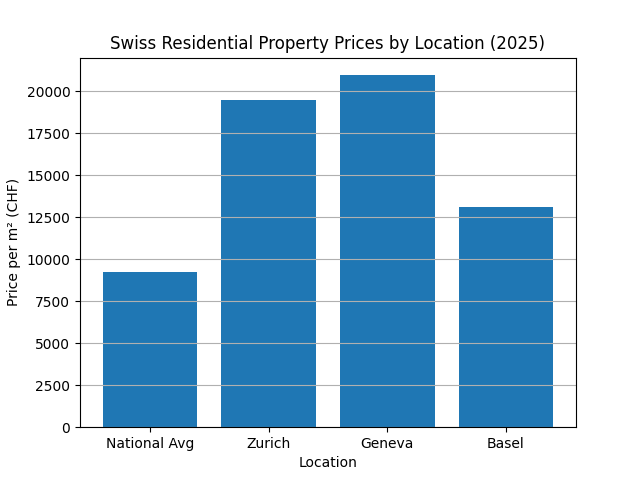
Zurich apartments: CHF ~18,900–21,000 per m²
-
Geneva apartments: ~CHF 20,960 per m²
-
Basel: ~CHF 13,000+ per m²
-
National average residential price: ~CHF 9,224 per m²
These figures illustrate how urban pricing differs sharply from national averages and reinforce the value of strategic location selection.
📉 2. Supply & Demand — A Structural Imbalance
The Swiss market remains defined by a persistent imbalance between limited supply and steady demand:
📌 Supply Constraints
-
Building land scarcity and strict zoning slow new housing delivery.
-
Despite a predicted uptick in construction activity for 2026 (residential starts rising), it will still fall short of closing the wedge between supply and demand.
📌 Demand Dynamics
-
Overall housing demand remains positive, but some studies suggest a slowdown or modest reduction in active buyers in 2026, particularly due to high prices and limited available stock.
-
Vacancy rates improved slightly (down from 6.4% towards ~6.1%), suggesting tightening market conditions.
This structural undersupply is a long-term bullish signal for Swiss property valuation, especially in core urban and growth corridors.
💼 3. Economic & Financial Environment
🏦 Mortgage & Interest Rates
The Swiss National Bank (SNB) is projected to hold its policy rate at 0% through 2026, providing continued low financing costs for borrowers.
This stable monetary environment is a crucial foundation for real estate pricing and buyer activity — low mortgage rates support affordability and transaction volumes, even as overall price growth moderates.
📉 Economic Growth Impact
Economic forecasts indicate a slower Swiss GDP growth around ~1.1% in 2026, reflecting global headwinds and softer external demand.
While not threatening fundamentals, this slower growth can moderate investor sentiment and rental market dynamics, especially in commercial property segments.
🏘️ 4. Segment Breakdown: Residential vs Commercial
🏠 Residential Market
Key Trends in 2026:
-
Owner-occupied housing: Remains attractive due to low financing costs and price stability forecasts.
-
Rental sector: Quoted rents and market rents continue to rise, though at a slower pace than previous years.
-
Demand shift: Younger buyers may delay purchases due to high prices, increasing long-term rental demand.
🏢 Commercial Real Estate
Commercial markets are more uneven:
-
Prime office and logistics space remains stable or slightly rising, particularly in strong economic hubs.
-
Secondary offices and lower-quality spaces face vacancy pressures as hybrid work trends persist.
Investors are focusing on quality commercial assets and mixed-use developments rather than traditional retail and office portfolios.
🌍 5. External & Structural Factors Shaping 2026
🌐 Foreign Demand & Regulations
Switzerland’s restrictive Lex Koller law limits foreign residential purchases, especially for second homes, which can constrain certain types of foreign investment. However, exceptions and structured investment vehicles still attract high-net-worth buyers.
🏗️ Construction Trends
Builders are ramping up activity, but increases will not fully alleviate housing shortages. This persistent gap supports long-term price resilience.
🏙♂️ Urban vs Peripheral Markets
Urban centers like Zurich, Geneva, and Basel are expected to outpace rural and peripheral areas in terms of both demand and price appreciation due to employment opportunities and lifestyle preferences.
📊 6. Risks & Challenges in 2026
⚠️ Affordability Constraints
As property values outpace wage growth, affordability challenges may dampen demand growth — especially for first-time buyers and middle-income households.
⚠️ Demographic Headwinds
Slower population growth projected for 2026 — partly due to reduced net immigration — could soften overall housing demand.
⚠️ Construction Costs & Delays
Rising input costs and lengthy approval processes threaten the speed of new supply delivery, potentially increasing market inefficiencies.
💡 7. Strategic Opportunities for Investors
📍 High-Demand Residential Assets
-
Multi-family and rental buildings in strong locations deliver steady returns.
-
Luxury residential properties maintain appeal for international investors seeking stable, safe returns.
🏙️ Urban Redevelopment & Mixed Use
-
Projects combining residential, office, and retail functions in urban cores are gaining traction as demand for live-work communities grows.
📈 ESG & Sustainability Premium
Properties with energy efficiency certifications and sustainability credentials may attract premiums as regulatory pressures and tenant preferences shift.
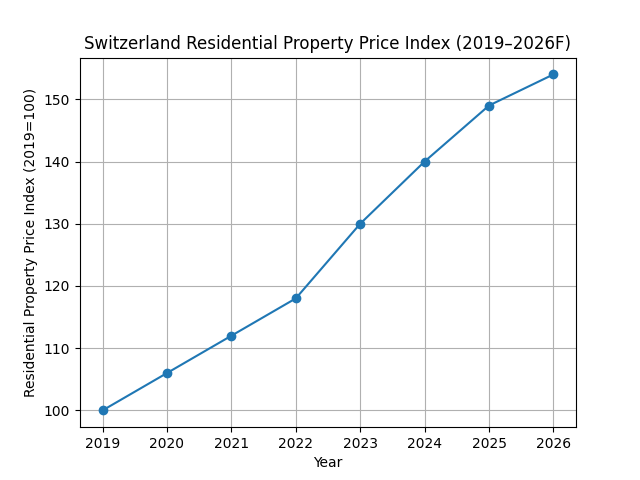
📈 Chart 1: Switzerland Residential Property Price Index (2019–2026F)
Shows long-term price growth and moderated 2026 forecast
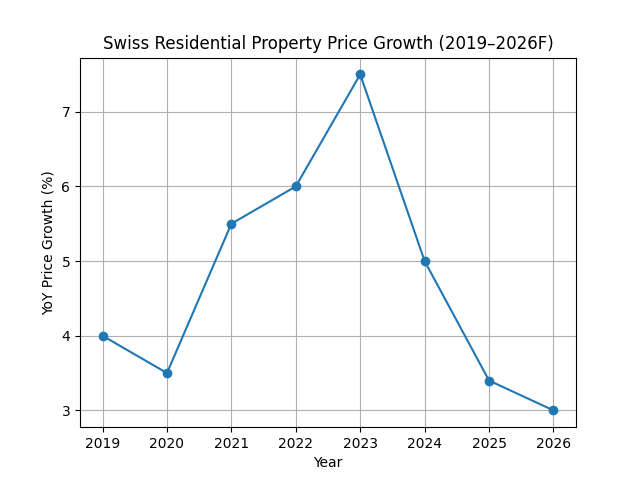
📊 Chart 2: Swiss Residential Property Price Growth (% YoY)
Illustrates slowing but still positive annual growth
🏙️ Chart 3: Swiss Residential Property Prices by Location (2025)
Compares national average with Zurich, Geneva, and Basel
🏁 Conclusion: Switzerland Real Estate in 2026
Overall, the Swiss real estate market in 2026 is forecast to remain stable and resilient, with continued albeit moderate price growth, strong urban demand, and a structural supply shortage underpinning long-term value. The economic backdrop is modest but not punitive, and financing conditions remain favorable.
For investors and homebuyers alike, the key in 2026 will be location quality, property type, and strategic timing, with opportunities concentrated in high-demand residential and mixed-use sectors.