New York’s historic Plaza Hotel is scheduled to close its doors in 2027 for a comprehensive multi-year restoration project focusing on its celebrated exterior. As reported by outlets including The Hollywood Reporter and The New York Times, the landmark property will remain shuttered for at least four years.
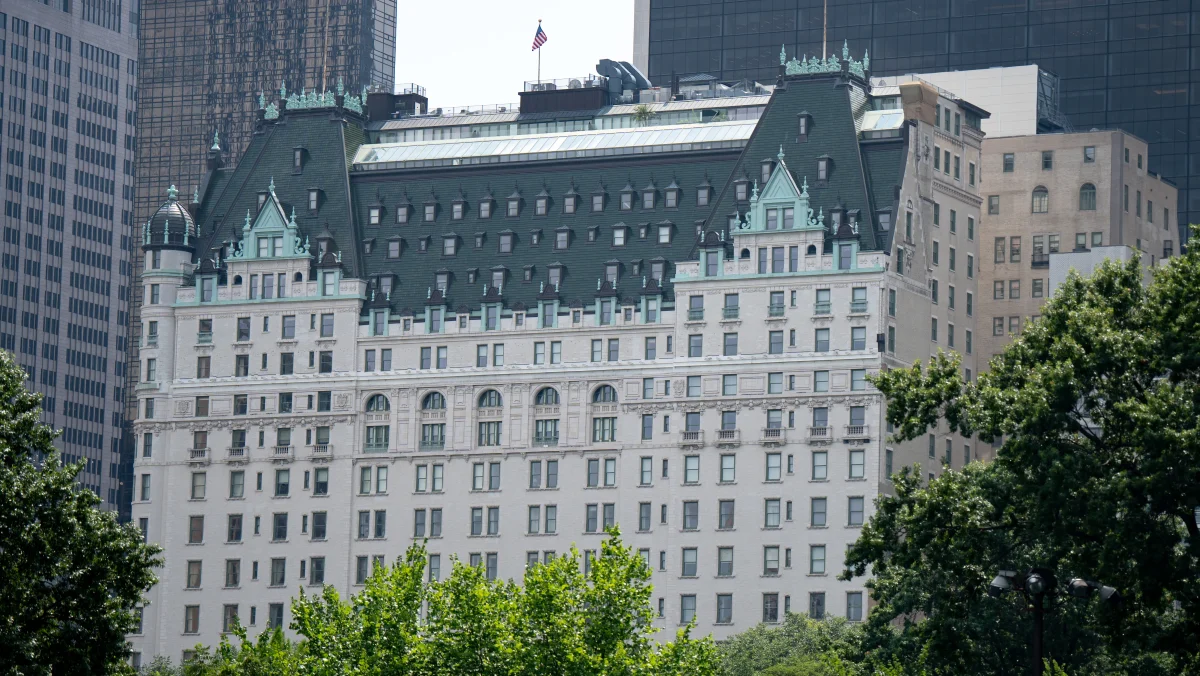
An Architectural Landmark on Grand Army Plaza
Occupying a prime position at Fifth Avenue and Central Park South, the French Renaissance-style châteauesque building has defined the Manhattan skyline for over a century. Opened in October 1907 and designed by architect Henry Janeway Hardenbergh, the structure is celebrated for its ornate white brick and limestone facade, steeply pitched slate roofs, and lavish interior detailing. Over the decades, the property has undergone various ownership transitions and major modernisations, yet its exterior silhouette remains one of the most recognisable examples of early twentieth-century American hotel architecture.
The building operates as a hybrid model containing both traditional hotel rooms and private residential condominiums. While the upcoming closure primarily affects the hospitality and public-facing operations, the sheer scale of the building requires an intervention that spans the entire structure, making a partial shutdown unviable.
The Scope of the 2027 Restoration
Beginning in 2027, the four-year hiatus is dedicated principally to a major structural and aesthetic cleanup of the historic facade. Historic preservation of this magnitude demands meticulous attention to original materials, including carved stonework, intricate masonry, and copper detailing that have weathered more than a century of New York winters and urban pollution.
Industry reports indicate that the property will be entirely closed to guests and visitors for the duration of the works, ensuring engineering teams have uninterrupted access to the exterior envelope. While interior spaces have seen previous modernisations—most notably during the mid-2000s conversion led by developer Elad Properties—this upcoming project represents the most extensive exterior overhaul in recent history.
Cultural Resonance and Urban Context
Beyond its architectural pedigree, The Plaza holds a unique position in global popular culture. It has served as a primary backdrop for numerous cinematic milestones, from Alfred Hitchcock’s North by Northwest to family features such as Home Alone 2: Lost in New York and the Eloise book series. This cultural embedding has cemented its status not merely as a commercial asset, but as a cultural institution of international significance.
For the local luxury hospitality and real estate ecosystem, the temporary loss of the hotel’s inventory is a notable event. However, preservation experts and market analysts generally view comprehensive capital expenditure of this scale as a prerequisite for maintaining the long-term asset integrity and heritage value of trophy properties in prime Manhattan locations.
- Historic trophy assets require intensive capital expenditure to preserve structural and aesthetic integrity over centuries.
- Facade restorations on landmark buildings often necessitate complete closures due to strict preservation standards and engineering complexities.
- Hybrid properties combining residential condominiums and hotel operations face unique logistical challenges during major capital works.
- Cultural resonance significantly underpins the long-term valuation of landmark real estate assets.
- Early planning for multi-year renovations helps mitigate prolonged disruption in ultra-prime urban markets.
For institutional investors and ultra-high-net-worth owners, landmark properties like The Plaza operate under a different set of economic rules compared to standard commercial real estate. While a four-year closure represents a temporary suspension of operational revenue, deferring necessary structural and facade maintenance on a historic asset carries a far greater risk of long-term depreciation. In the ultra-prime Manhattan market, meticulous adherence to preservation standards protects the irreplaceable equity inherent in architectural pedigree and location. Consequently, capital outlays for comprehensive restorations are viewed less as a cost centre and more as an essential preservation of capital value for future generations.
Related reads
New York’s Plaza Hotel to Close in 2027 for at Least Four Years (The Hollywood Reporter, 16 Oct 2026)
Plaza Hotel to Shut for Four-Year Cleanup of Its Celebrated Facade (The New York Times, 14 Oct 2026)
NYC’s Plaza Hotel to close in 2027 for multiyear facade restoration (Hotel Dive, 15 Oct 2026)
Plaza Hotel in NYC closing for 4-year renovation starting in 2027 (CBS News, 15 Oct 2026)
N.Y.C.’s Iconic Plaza Hotel Closing for 4-Year Restoration of Its Façade (People.com, 15 Oct 2026)
Sources & credits
- Feature: New York’s Plaza Hotel to Close in 2027 for at Least Four Years — Hollywood Reporter Real Estate. Linked, not reproduced.
- Main image: Hollywood Reporter Real Estate, from the original feature linked above; all rights remain with the publisher and photographer.
- Headlines via Google News RSS; content belongs to the linked publishers.
Videos are embedded from their original YouTube channels and remain the property of their publishers; ClubProperty hosts no third-party footage or photography. Prices and details are as reported by the sources linked above at the time of writing. Nothing here is financial advice.
Articoli correlati
La tenuta georgiana del Berkshire Hurst Grove si classifica per £11,3 milioni
Hurst Grove, an updated 18th-century Georgian estate across 37 acres in Berkshire, has been…
Leggi di piùAerin Lauder e Kohler portano la ceramica di Delft nel bagno moderno
Aerin Lauder collaborates with Kohler on the Fleurette Artist Editions collection, introducing Delft-inspired floral…
Leggi di piùIlluminazione architettonica: Le nuove collezioni di Coil + Drift
Explore how Coil + Drift's newest lighting collections use architectural restraint and material craftsmanship…
Leggi di piùRestaurare la prigione di Nara: una lezione magistrale dell'era Meiji sul riutilizzo adattivo
Architect Rie Azuma transforms a 1908 Meiji-era jail into a 48-suite luxury hotel, balancing…
Leggi di più