Across five continents, villages capped with thatch are celebrated for their rustic elegance and enduring craft. The technique, rooted in ancient reed and straw work, now attracts discerning buyers seeking authenticity.
A Global Survey of Thatched Heritage
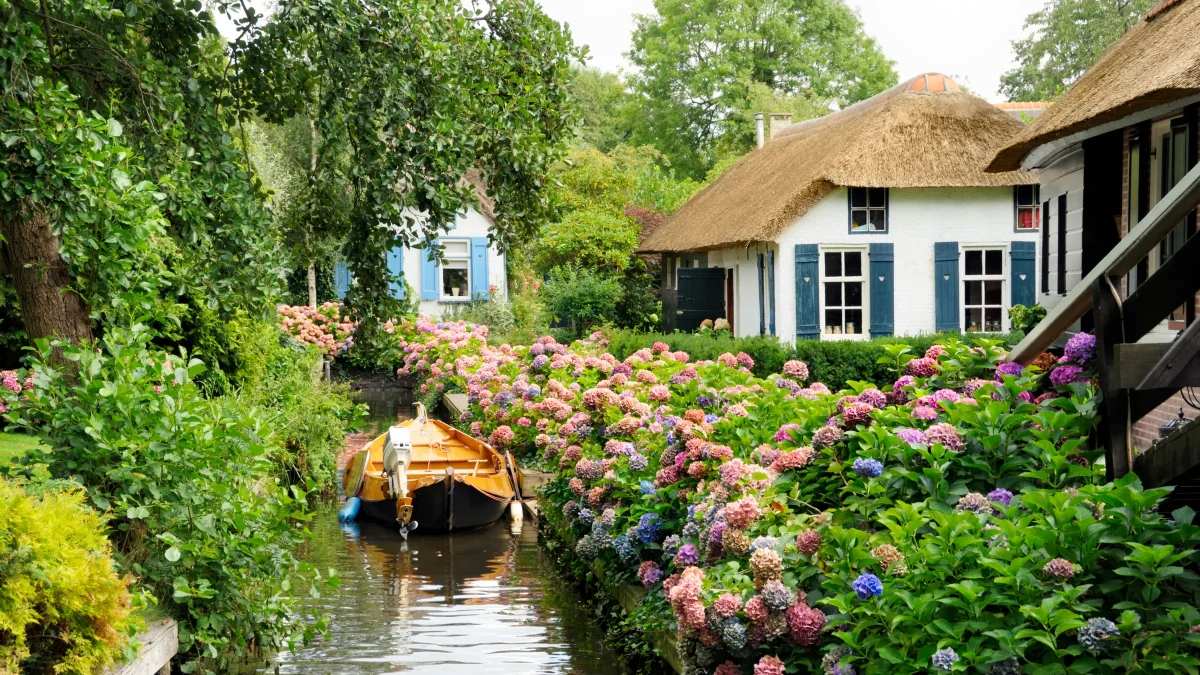
Architectural Digest’s recent gallery showcases twelve villages where thatched roofs dominate the skyline, spanning the Andes of Chile, the hills of England, the islands of Greece, the highlands of Peru, and the remote reaches of Japan. Each settlement retains a distinct vernacular, yet all share the same hand‑woven roofing made from locally sourced reeds, straw or dried grasses.
In Chile’s Los Lagos region, the roofs are constructed from native totora reeds harvested from lakebeds, a practice dating back to pre‑colonial Mapuche communities. Meanwhile, in Japan’s Gifu Prefecture, the traditional kayabuki technique uses rice‑straw bundles, a method documented in Edo‑period manuals and still taught in specialised workshops.
Craftsmanship as Luxury
Once a hallmark of modest rural dwellings, thatching has re‑emerged as a luxury craft. British Heritage Travel reported that the scarcity of skilled thatchers has driven prices for bespoke roof installations into the four‑figure range per square metre, positioning the material as a premium finish for high‑end country homes.
The labour‑intensive process—often requiring a team of three to five craftsmen for a single roof—means that each thatch roof is effectively a bespoke piece of architecture. The result is a living envelope that breathes, ages gracefully, and can be repaired piece by piece, extending the life of the structure for centuries.
Design Lessons from the Thatch Aesthetic
The visual rhythm of overlapping thatch creates a soft, undulating silhouette that softens harsh landscapes. Interiors traditionally feature low‑profile timber beams and stone hearths, reinforcing a tactile connection to nature.
Modern reinterpretations often pair the thatch envelope with glass walls or steel frames, creating a dialogue between old and new. In the English village of West Wycombe, a renovated cottage retains its original thatch while introducing floor‑to‑ceiling glazing that frames the surrounding countryside.
Preservation and Market Potential
Preserving thatched villages is not solely a cultural endeavour; it also offers a niche investment opportunity. Properties with authentic thatch roofs have demonstrated resilience in resale, particularly among buyers seeking heritage assets with a distinct narrative.
In markets such as the UK and Japan, heritage listings often grant tax incentives for restoration, while the scarcity of skilled thatchers adds a layer of exclusivity that can command premium sale prices. Reported sales of fully restored thatched cottages in Cornwall have reached upwards of €850,000, reflecting both the craft’s rarity and the buyer’s willingness to pay for authenticity.
- Source roofing material locally to maintain authenticity and reduce carbon footprint.
- Engage certified thatchers early; the craft’s limited supply can affect project timelines.
- Combine thatch with contemporary glazing to maximise daylight while preserving heritage.
- Consider heritage tax reliefs when budgeting for restoration of listed thatched properties.
- Market the narrative of craft and continuity to attract discerning, experience‑driven buyers.
The resurgence of thatched roofs signals a growing appetite among affluent investors for properties that embody both cultural depth and rarity. In regions where heritage protection is strong—such as the UK, Japan, and parts of South America—restored thatched homes have shown price stability and, in some cases, modest appreciation, driven by limited supply of skilled thatchers and the premium placed on authentic craftsmanship. Comparable sales suggest that a fully restored thatched cottage can command a price premium of 15‑25% over similar period‑property equivalents, making it a defensible niche asset for long‑term portfolios.
Related reads
Opinion | Growing Up in Peru, She Thought She Knew Poverty. America Surprised Her. (The New York Times, 8 Aug 2026)
Once the roof of the poor, English thatching is now a luxury craft for the wealthy few (British Heritage Travel, 7 Sep 2026)
Photos: This may be the most inspirational night school on Earth (NPR, 27 Sep 2026)
Preserving old houses keeps window open to the past (China Daily Global Edition, 31 Aug 2026)
7 Overlooked Towns In England Worth Visiting (WorldAtlas, 11 Aug 2026)
Sources & credits
- Feature: These Thatched Roof Villages Are Among the Most Beautiful in the World — Architectural Digest. Linked, not reproduced.
- Main image: Architectural Digest, from the original feature linked above; all rights remain with the publisher and photographer.
- Headlines via Google News RSS; content belongs to the linked publishers.
Videos are embedded from their original YouTube channels and remain the property of their publishers; ClubProperty hosts no third-party footage or photography. Prices and details are as reported by the sources linked above at the time of writing. Nothing here is financial advice.
Articoli correlati
Modernist Waterfront Home Near Copenhagen Hits the Market
A 1957 modernist house on the water north of Copenhagen is for sale, offering…
Leggi di piùSnøhetta Completes the Shanghai Grand Opera House
Explore Snøhetta's newly opened Shanghai Grand Opera House, featuring a helical, hand-fan-inspired staircase and…
Leggi di piùHigh Point Market Fall 2026: Emerging Interior Design Trends
Explore the definitive materials, finishes and colour palettes shaping premium residential interiors following the…
Leggi di piùInside the Hollywood Hills Renovation That Turned a $5m Listing Into a $4.6m Sale
Shaun White’s former Hollywood Hills residence was relisted at $5 million, renovated and sold for…
Leggi di più