




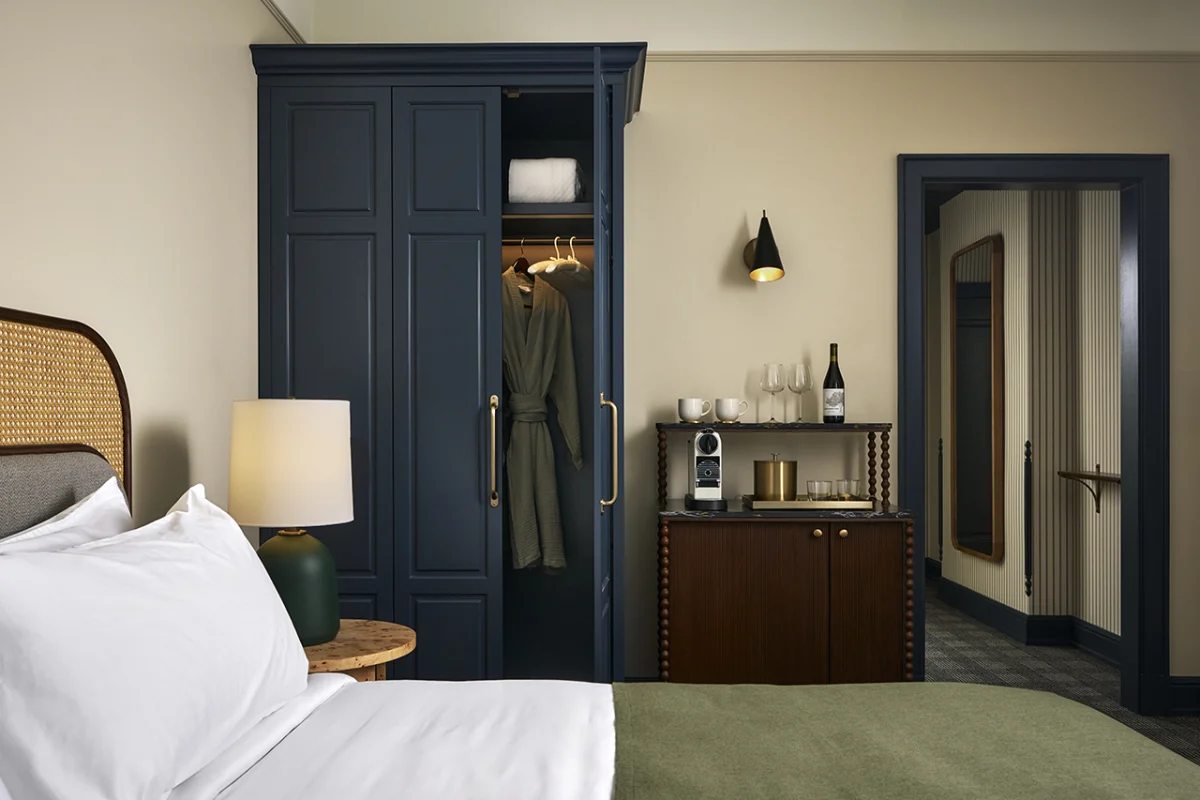
The Fidelity Hotel’s conversion of the historic Gwynne Building blends Beaux‑Arts grandeur with contemporary comforts. Its design choices reveal which materials and layouts retain value beyond fleeting trends.
Heritage Materials that Endure
New Waterloo and Looney & Associates retained the building’s original limestone façade and marble staircases, recognising that stone ages gracefully and signals quality to discerning buyers. Where new finishes were required, they selected brushed brass hardware and walnut paneling—materials that age well and complement the period palette.
In the guest rooms, the designers introduced reclaimed oak flooring, matching the building’s historic grain while providing a warm, durable surface. For tighter budgets, a high‑grade engineered wood with a similar finish can achieve the same visual impact without the cost of solid timber.
A Palette Rooted in Place
The colour scheme draws from Cincinnati’s river‑bank blues and the muted ochres of the city’s brick warehouses. Deep navy accent walls frame the public lounge, while soft ivory and warm greys dominate the corridors, creating a timeless backdrop that allows artwork and furnishings to stand out.
Homeowners can emulate this approach by selecting a restrained base colour and adding a single bold hue inspired by local geography—an affordable way to inject personality without overwhelming the space.
Light, Layout and Spatial Flow
Large arched windows were restored to flood the lobby and public dining areas with natural light, a feature that not only highlights architectural details but also reduces reliance on artificial lighting. The hotel’s layout preserves the original double‑height atrium, using it as a central gathering point that enhances perceived space.
In smaller residences, consider enlarging window openings where structural allowances exist, or using light‑reflective finishes and strategically placed mirrors to amplify daylight. Open‑plan layouts that respect existing structural columns can create flow while retaining the character of older properties.
Furniture and Craftsmanship with Resale Appeal
Custom-built walnut desks and upholstered leather chairs were commissioned from local artisans, reinforcing the hotel’s narrative of regional craftsmanship. These pieces are anchored to the architecture rather than trend‑driven designs, ensuring they remain desirable on the secondary market.
For those on a modest budget, sourcing well‑made pieces from reputable manufacturers and pairing them with vintage accessories can achieve a similar sense of quality without bespoke costs.
Balancing Luxury and Longevity
The hotel’s bathrooms feature backlit marble vanity tops and brass fixtures—elements that convey opulence yet are timeless. Such high‑impact upgrades add perceived value without the risk of rapid obsolescence.
Homeowners can replicate this balance by focusing on one or two statement features—such as a marble countertop or a designer lighting fixture—while keeping the remainder of the finishes classic and durable.
- Preserve original stone or brick where possible; it signals authenticity.
- Choose a restrained colour base and accent with a locally‑inspired hue.
- Maximise natural light through restored windows or reflective surfaces.
- Invest in quality, locally‑crafted furniture for lasting appeal.
- Add one or two luxury focal points rather than a full‑scale makeover.
- Use engineered wood or reclaimed materials for cost‑effective warmth.
The Fidelity Hotel’s careful blend of heritage preservation and selective modern upgrades demonstrates that premium historic properties can command strong resale premiums when design respects the original architecture. Reported by Design Milk, the 165‑room conversion underscores a growing appetite among investors for assets that combine cultural cachet with timeless interiors, suggesting comparable projects in mid‑size US cities may see valuation lifts of 10‑15 percent over standard refurbishments.
Related reads
A Cincinnati Landmark Begins Its Next Chapter (Design Milk, 25 Sep 2026)
Sources & credits
- Feature: Cincinnati’s Fidelity Hotel Gives a Beaux-Arts Landmark New Life — Design Milk. Linked, not reproduced.
- Main image: Design Milk, from the original feature linked above; all rights remain with the publisher and photographer.
- Headlines via Google News RSS; content belongs to the linked publishers.
Videos are embedded from their original YouTube channels and remain the property of their publishers; ClubProperty hosts no third-party footage or photography. Prices and details are as reported by the sources linked above at the time of writing. Nothing here is financial advice.
Related Articles
Kelly Wearstler on the Architecture of Creative Enterprise
AD100 designer Kelly Wearstler shares her operational model for building a global design brand…
Read morePrada Expands Its Milan Footprint With Flagship and Museum
Prada deepens its century-old Milanese roots with a dual-purpose retail and museum destination in…
Read moreDesigning a Manhattan Duplex Above the High Line
Explore the Manhattan duplex designed by Brian Atwood and Jake Deutsch, featuring bespoke marble…
Read moreLondon’s One Palace Green Debuts With $32 Million Residence
Explore the first completed residence at London's prestigious One Palace Green, styled by Martin…
Read more