Long overshadowed by the very artists he championed, the French collector and creator Gustave Fayet is stepping back into the architectural and cultural spotlight. A new immersive exhibition at the Fondation Louis Vuitton in Paris examines his profound influence on early twentieth-century aesthetics and historic preservation.
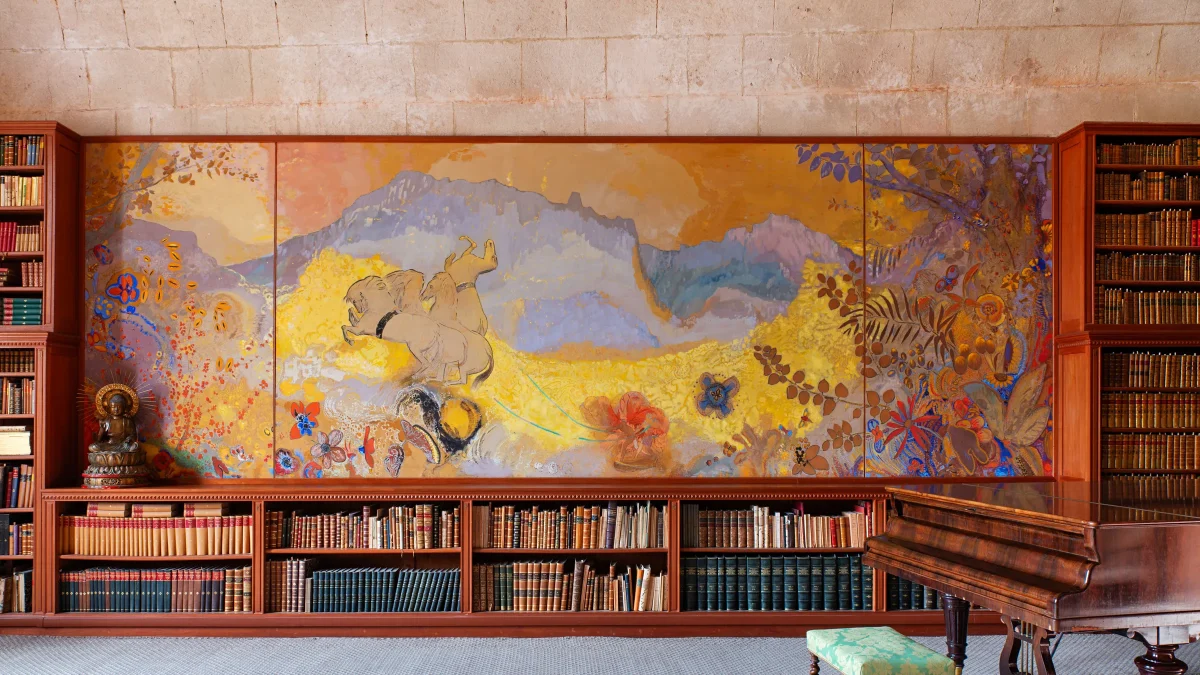
A Visionary Collector of Historic Spaces
Gustave Fayet occupied a unique intersection of artistic patronage, creation, and historic preservation in France during the late nineteenth and early twentieth centuries. Rather than merely acquiring canvases, Fayet understood that exceptional art required exceptional architecture. His most notable intervention involved the rescue and meticulous restoration of the Abbaye de Fontfroide in the Aude department of southern France, which he purchased in 1908.
At Fontfroide, Fayet transformed a neglected Cistercian monastery into a vibrant salon for the avant-garde. He commissioned stained glass windows, integrated extensive collections of contemporary works, and restored the monastic buildings with a reverence for their medieval bones. This approach anticipated modern adaptive reuse, demonstrating how historic structures could find new life through thoughtful artistic direction without erasing their centuries of provenance.
Patronage of the Avant-Garde
Fayet’s influence extended far beyond his own real estate holdings. As an early and discerning collector, he acquired significant bodies of work by Odilon Redon, Paul Gauguin, and other post-Impressionists when mainstream institutions remained indifferent. His residences functioned as living galleries where architecture, decorative arts, and fine art converged into a unified aesthetic statement.
The current exhibition in Paris, reported by architectural and cultural publications in October 2026, gathers the disparate threads of Fayet’s sprawling imagination. By reuniting works from his historic collections within a contemporary architectural marvel like Frank Gehry’s Fondation Louis Vuitton building, the presentation underscores the enduring relevance of Fayet’s curatorial vision.
Lessons in Heritage Stewardship
For modern custodians of historic properties, Fayet offers a compelling precedent. His methodology proved that historic preservation is not a static exercise in museum-like replication, but an active, creative dialogue between past epochs and contemporary design. By integrating modern stained glass, ceramics, and avant-garde paintings into medieval architecture, he established a layered aesthetic that increases the cultural and architectural depth of the estate.
As high-net-worth buyers increasingly look toward historic châteaux, abbeys, and country houses as alternative asset classes, Fayet’s historic stewardship highlights the value of visionary restoration. Properties imbued with a clear, intellectually rigorous narrative of cultural patronage consistently command greater long-term prestige within the international marketplace.
- Historic properties can be successfully revitalised through the integration of contemporary art and design.
- Adaptive reuse of monastic or heritage architecture requires a balance of structural reverence and creative vision.
- A documented provenance of artistic patronage adds enduring cultural and market value to historic estates.
- Collections of fine art and architecture are most impactful when conceived as unified, immersive environments.
- Custodian-investors should view historic restoration as an ongoing dialogue between past epochs and modern living standards.
The renewed attention on figures like Gustave Fayet underscores the enduring appeal of heritage properties with documented cultural provenance. In the upper tiers of the international real estate market, standard luxury finishes are increasingly superseded by historic significance and architectural pedigree. Estates that have been thoughtfully restored—particularly those with ties to significant artistic movements—frequently demonstrate superior liquidity and long-term capital preservation compared to generic contemporary builds. For international buyers acquiring historic châteaux or monasteries in France, investing in meticulous architectural restoration and establishing a clear cultural narrative protects asset value and enhances future resale distinction in an increasingly discerning global marketplace.
Related reads
Gustave Fayet Reemerges from the History Books (Architectural Digest, 20 Oct 2026)
Sources & credits
- Feature: Gustave Fayet Reemerges from the History Books — Architectural Digest. Linked, not reproduced.
- Main image: Architectural Digest, from the original feature linked above; all rights remain with the publisher and photographer.
- Headlines via Google News RSS; content belongs to the linked publishers.
Videos are embedded from their original YouTube channels and remain the property of their publishers; ClubProperty hosts no third-party footage or photography. Prices and details are as reported by the sources linked above at the time of writing. Nothing here is financial advice.
関連記事
Timeless Design Choices from Mexico City’s Book‑Lined Bar
How material, light and layout in Em‑Estudio’s basement bar create lasting value and ideas…
続きを読むThe Architecture of Color: How to Use Bold Hues with Discipline
Master the application of saturated tones in premium interiors with strategic material pairing, lighting…
続きを読むIlluminating the Threshold: Exterior Lighting Design and Value
Explore how intentional exterior lighting design enhances residential appeal, balances atmosphere, and protects long-term…
続きを読むThe Architecture of Seasonal Interiors: Beyond the Trend Cycle
Explore how to integrate fleeting festive trends like the popular bow motif without compromising…
続きを読む