


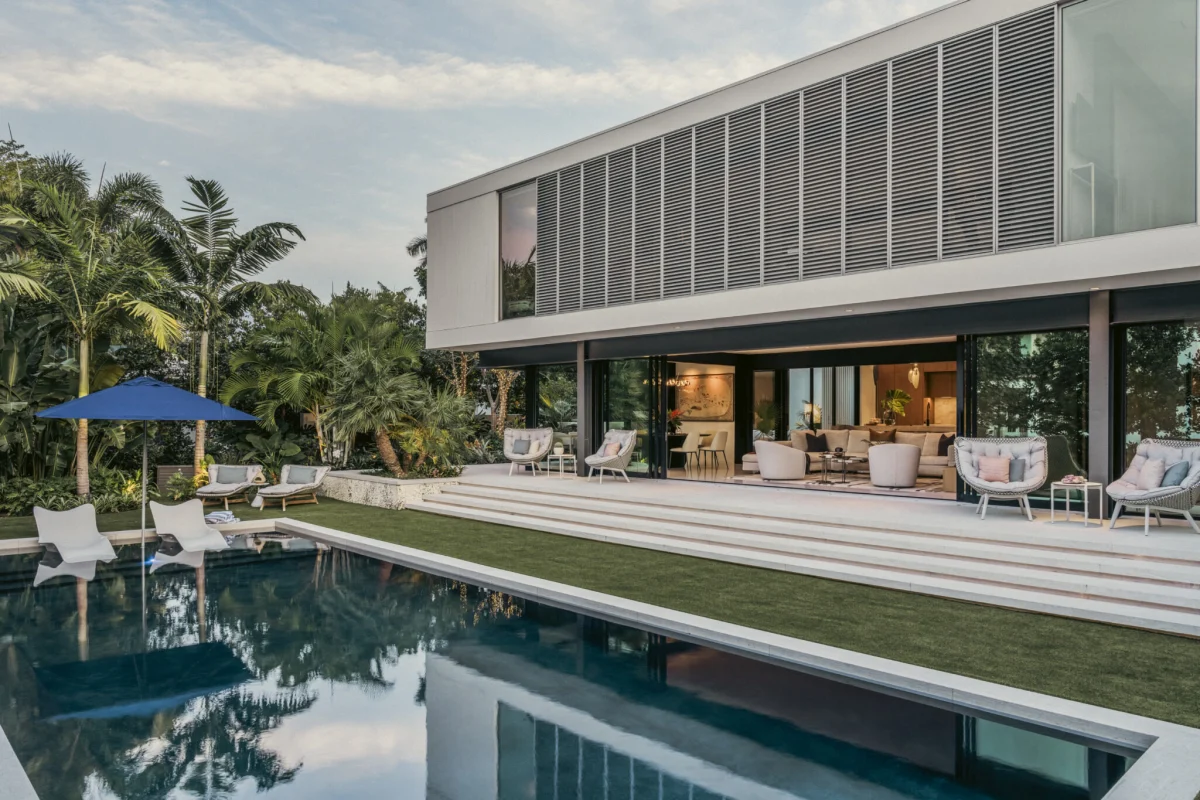
Following a six-year reconstruction that stripped the structure down to its original steel frame, the 1955 Biggs Residence in Delray Beach has re-emerged. Owners Nina and Michael Marco navigated the delicate balance of preserving Paul Rudolph's tropical modernist principles while integrating contemporary performance standards.
Material Authenticity and the Steel Skeleton
Restoring mid-century architecture of this scale requires strict adherence to the original palette, yet demands modern material resilience, particularly in coastal Florida environments. The project necessitated stripping the house back to its fundamental steel skeleton before rebuilding can safely begin. Architects and restorers utilized concrete, glass, and restored structural steel, aligning with Rudolph’s original design intent.
For property owners undertaking similar heritage projects, investing in the core structural envelope rather than surface finishes guarantees long-term value. Sourcing period-appropriate woods and masonry requires patience, but maintaining material honesty remains a primary driver of sustained appreciation in the architectural real estate sector.
Light, Air, and Tropical Modernist Layouts
Paul Rudolph’s tropical modernist philosophy relied heavily on passive ventilation, deep overhangs, and continuous indoor-outdoor visual connections. The six-year overhaul refined these spatial transitions, ensuring that natural light penetrates deep into the floor plate without introducing excessive solar heat gain. Large expanses of glass frame the surrounding landscape, acting as dynamic, living murals throughout the day.
Adapting such layouts for contemporary life often involves upgrading glazing technology to meet strict hurricane codes without sacrificing sightlines. Slim-profile frames and low-iron glass provide the necessary structural performance while preserving the airy, weightless aesthetic that defines mid-century coastal design.
Craftsmanship Versus Fleeting Interior Trends
Inside, the design avoids transient decorative fads in favour of bespoke millwork and fixed architectural built-ins that echo Rudolph’s functionalist approach. Custom cabinetry, terrazzo flooring, and integrated lighting solutions anchor the rooms, reducing the need for freestanding furniture and maintaining clean horizontal lines.
Buyers evaluating architectural properties should look closely at how built-in elements interact with the architecture. When craftsmanship is integrated directly into the fabric of the building—such as custom wood paneling or poured-in-place concrete hearths—it creates a cohesive environment that significantly outperforms trend-driven interior decoration at resale.
- Prioritise structural restoration, such as steel frames and concrete cores, over cosmetic updates.
- Invest in high-performance, slim-profile glazing that meets modern energy and safety codes without altering sightlines.
- Use fixed architectural built-ins and custom millwork to reduce clutter and define spatial flow.
- Select a restrained, tactile material palette—such as terrazzo, exposed steel, and warm timber—that ages gracefully.
- Design for passive climate control through deep overhangs and cross-ventilation to enhance both comfort and longevity.
Architectural properties carrying the provenance of masters like Paul Rudolph occupy a distinct tier in the global luxury market. While standard coastal homes are often priced primarily on square footage and proximity to the water, verified modernist icons command premiums based on scarcity and art-market dynamics. Reports indicate that the six-year reconstruction of the Biggs Residence involved a total expenditure of approximately $7 million, reflecting the intensive craftsmanship required for museum-grade restorations. For international investors, such assets function as architectural art pieces, typically demonstrating greater capital preservation and resilience during market downturns compared to generic luxury new builds.
Related reads
Inside the Six-Year Reconstruction of a Paul Rudolph Original (Design Milk, 29 Sep 2026)
A 1955 Florida house was stripped to its steel frame during restoration; six years and $7 million later, (timesofindia.indiatimes.com, 30 Sep 2026)
Delray Beach’s Modernist Marvel: Unveiling the Six-Year Transformation of a Paul Rudolph Icon (freeyork, 30 Sep 2026)
Sources & credits
- Feature: A Paul Rudolph Original Is Rebuilt for Modern Coastal Living — Design Milk. Linked, not reproduced.
- Main image: Design Milk, from the original feature linked above; all rights remain with the publisher and photographer.
- Headlines via Google News RSS; content belongs to the linked publishers.
Videos are embedded from their original YouTube channels and remain the property of their publishers; ClubProperty hosts no third-party footage or photography. Prices and details are as reported by the sources linked above at the time of writing. Nothing here is financial advice.
Related Articles
Craftsmanship Defines a Park Avenue Duplex
Explore a meticulously detailed Park Avenue duplex designed by Julie Hillman and Ferguson &…
Read moreBalancing Colour and Restraint in Prime Residential Interiors
Explore interior designer Ella Jones's approach to blending rich colour, classic influences, and contemporary…
Read moreDesigning N53: Dubai’s Falconry-Inspired Lounge
Bergman Design House brings regional heritage and bespoke craftsmanship to the interiors of Dubai's…
Read moreKelly Behun Curates a Manhattan Residence for an Ambassador
Interior designer Kelly Behun pairs high-calibre contemporary art with tailored living spaces in a…
Read more