


Designer Ryan Saghian is rolling out a network of Eichholtz showrooms across California that deliberately reject uniform corporate staging. Each space is tailored to the architectural vernacular and lifestyle demands of its specific micro-market.
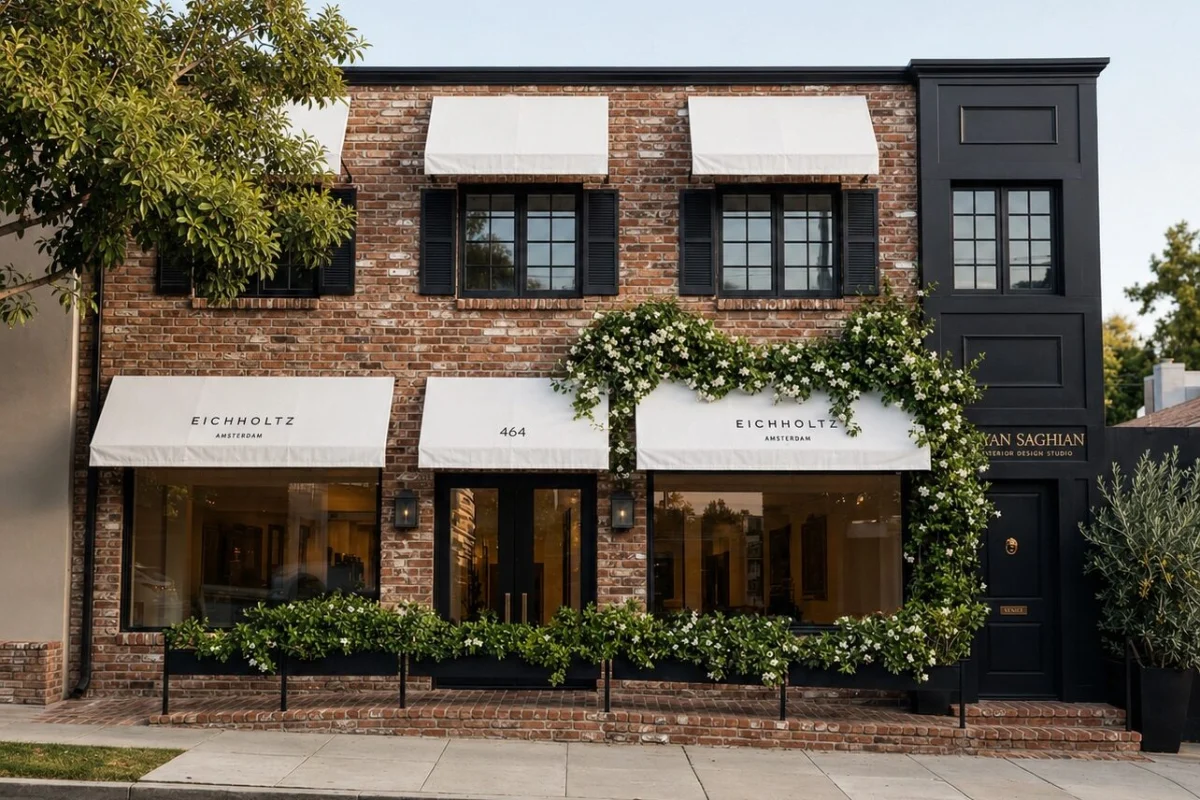
Original featureEichholtz California Expands Its West Coast FootprintDesign Milk · 6 October 2026 →
Rejecting the Monolith: Regionalism in Retail Architecture
Standardised global footprints often fail to resonate in high-end property markets where buyers demand authenticity. The expansion of Eichholtz in California, reported by Design Milk in October 2026, sidesteps the traditional cookie-cutter showroom model. Instead, designer Ryan Saghian has conceived spaces that respond directly to their immediate geographic surroundings, acknowledging that a coastal enclave requires a markedly different spatial temperament than an urban inland center.
For property investors and interior architects, this localized methodology offers a clear lesson: interiors must converse with their setting. Imposing a generic aesthetic onto a distinct architectural envelope diminishes both visual coherence and perceived asset value. Tailoring finishes, scale, and sightlines to the surrounding climate and topography creates an immediate psychological resonance with prospective buyers.
Materiality, Palette, and the Test of Time
Navigating the boundary between fleeting interior trends and lasting resale value relies heavily on uncompromising material selection. The California spaces leverage tactile surfaces—travertine, brushed brass, heavy linen, and dark walnut—that age gracefully under intense natural light. Unlike high-gloss synthetic finishes or hyper-trendy colorways that date within eighteen months, foundational natural materials develop a desirable patina, signaling quality to discerning purchasers.
Applying this at scale does not require unlimited capital. At a high budget, custom millwork and monolithic stone islands anchor a room with permanence. For more modest budgets, the same principle applies through the strategic use of solid wood accent pieces, tactile ceramic lamps, and unlacquered hardware that feels substantial to the touch, avoiding lightweight veneers that undermine the perception of luxury.
Light, Flow, and Spatial Choreography
California architecture is fundamentally defined by the manipulation of sunlight. Saghian’s showroom layouts prioritize unhindered circulation and the framing of exterior vistas, treating natural light as a primary building material. Furniture is grouped to create intimate zones within voluminous open-plan spaces, avoiding the perimeter-hugging furniture arrangements common in poorly planned properties.
When staging residences for the international market, spatial choreography dictates how a buyer perceives square footage. Generous negative space around sculptural furniture pieces communicates luxury more effectively than overcrowded rooms. Low-profile seating preserves sightlines to windows and outdoor terraces, ensuring the interior architecture remains the primary focal point.
- Match interior palettes and material choices to the local climate and architectural vernacular.
- Invest in foundational tactile materials like travertine, solid wood, and unlacquered metals that develop a patina.
- Avoid overcrowded layouts; use negative space and low-profile furniture to preserve sightlines.
- Treat natural light as a primary design element by positioning key seating areas to leverage exterior views.
- Prioritize timeless architectural millwork over fast-moving decorative trends for long-term asset value.
For real estate investors, the strategy behind these showrooms mirrors the requirements of high-end asset staging. In prime residential markets, generic interiors fail to command top-tier valuations because sophisticated buyers increasingly purchase an integrated lifestyle rather than mere square footage. When properties reflect their regional context through authentic materials and thoughtful spatial planning, time on market decreases and perceived value aligns with top-quartile comparable sales. Investing in regionally attuned, high-craftsmanship interior elements provides a tangible return upon exit, insulating the asset against shifting aesthetic fads.
Related reads
Why Eichholtz California Doesn’t Want Identical Showrooms (Design Milk, 6 Oct 2026)
Sources & credits
- Feature: Eichholtz California Expands Its West Coast Footprint — Design Milk. Linked, not reproduced.
- Main image: Design Milk, from the original feature linked above; all rights remain with the publisher and photographer.
- Headlines via Google News RSS; content belongs to the linked publishers.
Videos are embedded from their original YouTube channels and remain the property of their publishers; ClubProperty hosts no third-party footage or photography. Prices and details are as reported by the sources linked above at the time of writing. Nothing here is financial advice.
Related Articles
Elevating Interiors with Ready-Made Window Treatments
Explore how curated ready-made window treatments offer a balance of accessibility and refined interior…
Read moreTimeless Renovation: Preserving Age in Mataró’s La Casa del Pirata
How Raúl Sánchez’s restrained refurbishment of a Catalan pirate’s heritage home balances raw history…
Read moreCompact Paris Apartment Design by Anthony Aoun
Interior architect Anthony Aoun transforms a 43sqm Paris apartment in a late 19th-century building,…
Read moreTimeless Materials in a West Vancouver Forest Home
Explore how concrete, glass and crafted woodwork create a forest‑integrated residence that balances style…
Read more