




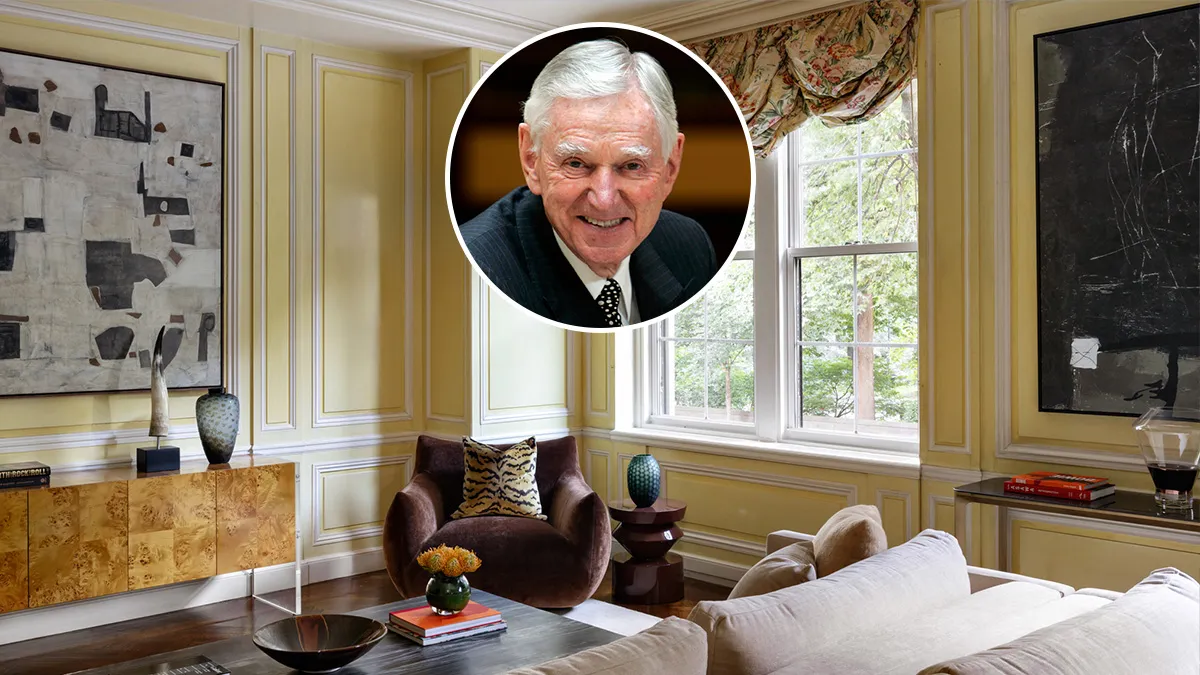
After more than four decades as a New York City private base for late billionaire David Murdock, a classic Fifth Avenue residence has arrived on the market. Listed at a reported $15 million, the property underscores the enduring allure of legacy addresses for ultra-high-net-worth buyers.
The Anatomy of a Manhattan Pied-à-Terre
For the globally mobile elite, a New York City residence functions not merely as a dwelling, but as a strategic anchor. The concept of the pied-à-terre has evolved alongside global wealth distribution, with buyers prioritizing locations that offer immediate proximity to cultural institutions, private clubs, and financial centres. Properties situated directly on Fifth Avenue occupy a distinct tier within this ecosystem, commanding attention for their architectural provenance and exclusivity.
Long-term ownership patterns in buildings along this corridor tend to be exceptionally stable. When residences held for forty years or more return to the market, they present rare opportunities for buyers seeking established infrastructure rather than speculative developments. These properties frequently retain period details that modern new-builds cannot replicate, appealing to collectors of architectural history.
Architectural Pedigree and Fifth Avenue Context
Residences positioned along Fifth Avenue typically operate within stringent cooperative structures that dictate everything from renovation protocols to financial liquidity requirements. These buildings demand an understanding of local board expectations, where discretion and substantial balance sheets are baseline prerequisites for prospective purchasers.
The interior layouts of historic maisonettes and duplexes reflect an era of formal entertaining and distinct separation of private quarters. High ceilings, intricate moldings, and substantial room proportions define these spaces, offering a structural contrast to contemporary open-plan minimalism. For discerning buyers, these architectural constraints are viewed as assets rather than limitations, providing a formalized canvas for interior curation.
Capital Preservation in Prime Corridors
Prime Manhattan real estate functions as a traditional store of value, largely insulated from broader economic volatility. Real estate assets in premier micro-locations like the Upper East Side maintain liquidity driven by structural supply constraints. New developments along primary park-adjacent avenues are strictly limited by zoning and historic district regulations, ensuring that established co-ops retain their relative market positioning.
Pricing at the $15 million threshold reflects a mature segment of the luxury market where buyers evaluate cost per square foot against scarcity, building financials, and service levels. Properties with single-owner histories spanning decades often attract buyers who recognize the intrinsic value of undisturbed ownership lineages within premier cooperatives.
- Prioritize historic corridors with strict zoning to safeguard long-term asset value.
- Evaluate cooperative board requirements and financial liquidity rules before entering the Manhattan market.
- Recognize that single-owner legacy properties often require capital expenditure to align infrastructure with contemporary standards.
- View classic architectural proportions and period details as permanent structural advantages.
- Assess pied-à-terre investments through the dual lens of lifestyle utility and capital preservation.
The $15 million price point for a legacy Fifth Avenue duplex highlights the resilience of prime Manhattan real estate, where historical supply constraints protect asset values. Unlike speculative new-build condominiums, established cooperative buildings on Fifth Avenue offer distinct barriers to entry, including rigorous financial disclosures and board approvals. This friction creates a specialized sub-market shielded from broader market fluctuations. For international investors, acquiring a property with a multi-decade ownership history provides a reliable store of capital, steady comparative pricing metrics, and long-term liquidity rooted in perennial global demand for prime New York addresses.
Related reads
Late Billionaire David Murdock’s Fifth Avenue Maisonette Lists for $15 Million (Robb Report, 1 Oct 2026)
Late Billionaire David Murdock’s Fifth Avenue Maisonette Lists for $15 Million (Forex Factory, 1 Oct 2026)
David Murdock’s N.Y.C. Duplex in Photos (Yahoo Lifestyle Singapore, 1 Oct 2026)
175 5th Avenue 8 South in Photos (Yahoo, 30 Sep 2026)
Sources & credits
- Feature: Late Billionaire David Murdock’s Fifth Avenue Maisonette Lists for $15 Million — Robb Report Shelter. Linked, not reproduced.
- Main image: Robb Report Shelter, from the original feature linked above; all rights remain with the publisher and photographer.
- Headlines via Google News RSS; content belongs to the linked publishers.
Videos are embedded from their original YouTube channels and remain the property of their publishers; ClubProperty hosts no third-party footage or photography. Prices and details are as reported by the sources linked above at the time of writing. Nothing here is financial advice.
Related Articles
Who lives in Monaco? The 2026 guide to the world’s most famous neighbourhood
Who Lives in Monaco? The 2026 Guide to Its Famous Residents — ClubProperty Photo:…
Read more100 Gold Street: A High‑Rise Vision for Lower Manhattan
The 100 Gold Street scheme proposes nearly 4,000 luxury apartments on a historic site…
Read moreVenice Palazzos and the Luxury Hotel Revival
Explore how historic Venetian palazzos transformed into luxury hotels influence local high-end real estate…
Read moreAndros: The Quiet Greek Island Capturing High-End Buyers
Discover the understated Greek island of Andros, where hilltop hideaways and private beaches offer…
Read more